Living in Fes: the ultimate expat guide
Everything you need to know for a successful life in Fes.
Fes stands as Morocco's spiritual and intellectual heart, a city where medieval traditions blend seamlessly with modern life. Founded in the 9th century, this former imperial capital remains home to 1.256 million residents according to the 2024 census. Located in northeastern Morocco at the foothills of the Atlas Mountains, Fes offers expatriates an authentic North African experience far removed from the tourist-heavy atmosphere of Marrakech or Casablanca.
The city divides into three distinct areas: the ancient Fes el-Bali (the world's largest car-free urban zone and UNESCO World Heritage Site), Fes el-Jdid (the 13th-century royal quarter), and the Ville Nouvelle (the French-built modern district). This unique urban structure allows residents to choose between immersive traditional living or contemporary comfort with European-style amenities.
5 Good Reasons to Move to Fes
- Affordability: Living costs run 30-40% lower than Casablanca or Marrakech, with quality apartments available from USD 180 monthly.
- Cultural Immersion: Home to the world's oldest continuously operating university and the largest medieval medina, offering unparalleled historical depth.
- Authentic Lifestyle: Less tourist-oriented than other Moroccan cities, providing genuine local experiences and community connections.
- Strategic Location: Well-connected by train and air to Casablanca, Rabat, and European destinations via Fes-Saïss International Airport.
- Mild Climate: Mediterranean climate with warm summers and cool winters, ideal for year-round outdoor activities.
Working in Fes: Employment Opportunities and Industries
The job market in Fes centers on tourism, traditional crafts, education, and agro-food processing. While the city lacks the industrial base of Casablanca or Tangier, it offers unique opportunities for expatriates interested in hospitality, cultural preservation, and academic work. The Fes-Meknes region accounts for 13.4% of Morocco's unemployed population, reflecting broader national employment challenges.
Key Economic Sectors
Tourism drives much of Fes's economy, with the city attracting visitors to its UNESCO-listed medina, leather tanneries, and traditional workshops. Expatriates find opportunities managing riads (traditional guesthouses), leading cultural tours, or working in hospitality management. The traditional crafts sector—including leather goods, ceramics, metalwork, and textiles—employs thousands of artisans and offers openings for those interested in craft management or export businesses.
The education sector provides stable employment through language schools, international programs, and Sidi Mohamed Ben Abdellah University (USMBA), which employs over 1,370 academic staff. Remote work has also become increasingly viable, with reliable internet infrastructure in the Ville Nouvelle making Fes attractive for digital nomads.
Employment Data Overview
Morocco's national unemployment rate reached 13.3% in 2024, with youth unemployment (ages 15-24) at 36.7%. The service sector created 160,000 new jobs nationally in 2024, while industry added 46,000 positions. Average monthly salaries in Fes hover around 4,525 MAD (approximately USD 450) after tax.
National Unemployment Rate (2024) | 13.3% |
Average Monthly Net Salary (Fes) | 4,525 MAD (~USD 450) |
Key Sectors | Tourism, Crafts, Education, Agro-food |
Sources: Morocco's Higher Commission of Planning (HCP), Numbeo 2025
Higher Education and Universities in Fes
Fes holds a unique place in global academic history as home to the University of Al-Qarawiyyin, recognized by UNESCO and Guinness World Records as the world's oldest continuously operating educational institution. Founded in 859 AD by Fatima al-Fihri, this institution pioneered the concept of degree-granting education. Today, Fes combines this rich heritage with modern higher education options.
University of Al-Qarawiyyin
Originally a mosque-school complex, Al-Qarawiyyin was integrated into Morocco's state university system in 1963. The institution focuses on Islamic studies, Arabic language, and traditional sciences, operating across four colleges in Fes, Tétouan, Marrakech, and Agadir. Its historic library houses over 4,000 manuscripts dating from the 9th century, including works in Arabic, Hebrew, and Latin. While primarily serving Moroccan students pursuing religious education, the university attracts scholars researching Islamic history and Arabic studies.
Sidi Mohamed Ben Abdellah University (USMBA)
Founded in 1975, USMBA serves as Fes's primary modern university with over 86,000 students across 12 institutions organized into four academic poles: Languages and Humanities, Legal and Economic Sciences, Science and Technology, and Medical Sciences. The Times Higher Education World University Rankings placed USMBA as Morocco's top-ranked university in 2022. Programs follow the LMD system (Licence, Master, Doctorate), with engineering diplomas and medical degrees also available. USMBA participates in ERASMUS Mundus, enabling student exchanges with European universities. Tuition for Moroccan public universities remains minimal, while private institutions charge higher fees.
Sources: USMBA Official Website, QS Top Universities
Schools and Education for Expatriate Children
Families relocating to Fes face more limited international schooling options compared to Casablanca or Rabat. However, several quality institutions serve the expatriate community, with additional options in nearby Ifrane (approximately 70 km away). Morocco's education system requires compulsory schooling from ages 6 to 13, with instruction in Arabic and French in public schools.
International School Options
The Al Akhawayn School of Ifrane (ASI) operates under Al Akhawayn University, offering an American curriculum from kindergarten through grade 12. Located in the mountain town of Ifrane (about one hour from Fes), this school serves expatriate families seeking English-language, American-style education. Annual tuition ranges from USD 8,000 to USD 15,500 depending on grade level.
Within Fes itself, private Moroccan schools offer bilingual programs in French and Arabic, with some adding English instruction. These schools follow the French educational system leading to the Moroccan Baccalaureate (equivalent to A-levels or high school diploma). Private school fees in Fes typically range from 20,000 to 40,000 MAD (USD 2,000-4,000) annually for primary education, significantly lower than international schools in larger cities.
French-Language Education
Morocco's network of French schools, accredited by the Agency for French Teaching Abroad (AEFE), primarily operates in Casablanca, Rabat, and Marrakech. Families requiring French curriculum education may need to consider boarding options or commuting arrangements. Local private schools in Fes offering bilingual French-Arabic programs provide an alternative pathway.
Sources: John Catt's International Schools, Morocco Ministry of Education
Housing and Neighborhoods in Fes
Fes offers remarkably affordable housing compared to Morocco's coastal cities, with options ranging from traditional riads in the ancient medina to modern apartments in the Ville Nouvelle. The property market remains accessible to expatriates, with rental prices among the lowest in major Moroccan cities.
Expat-Friendly Neighborhoods
Ville Nouvelle: The French-built modern district appeals to expatriates seeking contemporary comfort. Tree-lined boulevards, European-style cafes, international restaurants, and modern shopping facilities create a familiar environment. This area offers the best nightlife, reliable utilities, and easy access to public transport. Apartment rents run higher than elsewhere but include modern amenities.
Fes el-Bali (Medina): The ancient walled city provides an immersive cultural experience. Foreigners increasingly purchase and renovate traditional riads (courtyard houses) for personal residence or tourist rentals. Navigation requires learning the maze-like streets, and cars cannot enter. Living here means embracing traditional rhythms—donkey transport, call to prayer, and artisan workshops as neighbors.
Agdal and Saiss: These developing districts near the university offer modern apartments at lower prices than central Ville Nouvelle. Popular with young professionals and students, they provide good value with growing amenities.
Rental Prices (2025)
Housing costs in Fes remain highly affordable by international standards. The following figures reflect current market conditions based on Numbeo data.
1-Bedroom Apartment (City Centre) | 3,500 MAD (~USD 350) |
1-Bedroom Apartment (Outside Centre) | 1,375 MAD (~USD 138) |
3-Bedroom Apartment (City Centre) | 5,250 MAD (~USD 525) |
3-Bedroom Apartment (Outside Centre) | 2,000 MAD (~USD 200) |
Sources: Numbeo December 2025
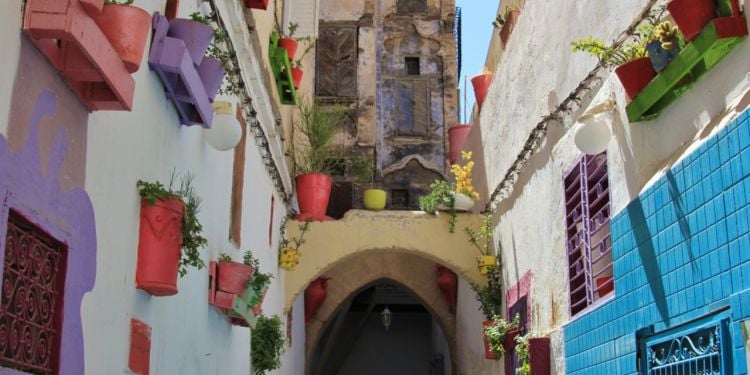
Accommodation in Fez
If you intend to move to Fez, it should not be difficult to find somewhere to live in this historic city, as rental prices are fairly low. You should ...
Leisure, Culture, and Things to Do in Fes
Fes offers extraordinary cultural depth unmatched elsewhere in Morocco. The city's ancient medina, living craft traditions, and rich culinary heritage provide endless exploration opportunities. While nightlife remains limited compared to Casablanca or Marrakech, cultural activities and outdoor experiences more than compensate.
Historic Sites and Museums
The Medina of Fes el-Bali itself serves as an open-air museum with over 9,400 alleyways containing historic monuments at every turn. Key sites include the Bou Inania Madrasa (14th-century Islamic school open to non-Muslims), Al Attarine Madrasa with its stunning tilework, and the Chouara Tanneries where leather has been processed using traditional methods for centuries.
The Dar Batha Museum occupies a former 19th-century palace, showcasing Moroccan arts including ceramics, textiles, and woodwork. The Nejjarine Museum of Wooden Arts and Crafts occupies a beautifully restored 18th-century caravanserai with rooftop terrace views. The Borj Nord Arms Museum houses over 5,000 weapons spanning Moroccan military history.
Cultural Events
The Fes Festival of World Sacred Music (typically held in early June) brings international performers for concerts in historic venues throughout the medina. This week-long event draws visitors worldwide and offers residents unique cultural programming. Jazz in Riads complements the main festival with intimate performances in traditional courtyards.
Day Trips and Nature
The nearby Atlas Mountain foothills offer hiking and scenic drives. Ifrane (70 km south) provides a mountain retreat with cedar forests and ski facilities in winter. The Moulay Yacoub thermal baths (20 km northwest) offer natural hot springs popular for relaxation. Meknes, another imperial city, sits just 45 minutes away by train, making easy day trips possible.
Sources: Moroccan National Tourist Office
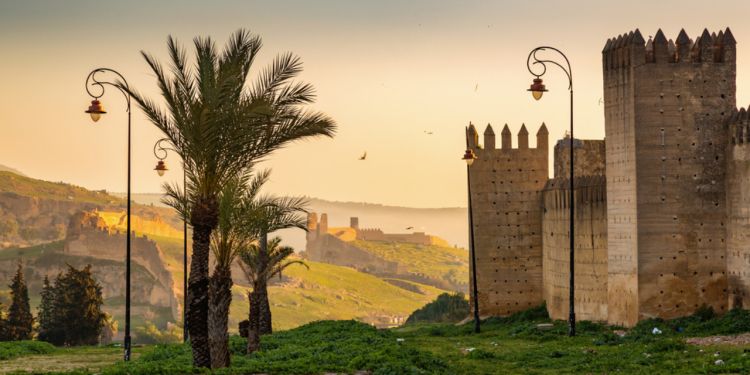
Things to do in Fez
Fez is a city full of historical sights, including the world's oldest university. The medina is particularly large and is the largest urban ...
Daily Life and Getting Around Fes
Life in Fes follows traditional Moroccan rhythms, with mornings starting early at fresh markets, afternoons slowing for heat and meals, and evenings bringing social activity. The medina operates largely car-free, with donkeys and handcarts handling goods transport through narrow alleys. Modern conveniences concentrate in the Ville Nouvelle, where daily routines feel more familiar to Western expatriates.
Transportation Options
Petit Taxis: Red metered taxis operate within city limits, carrying up to three passengers. Fares remain inexpensive—expect 6 MAD (USD 0.60) base fare plus approximately 8.85 MAD per mile. Taxis provide the most practical way to move between the medina and Ville Nouvelle.
Public Buses: Local buses connect the Ville Nouvelle with medina gates and outlying areas. A single trip costs 4 MAD (USD 0.40), with monthly passes at 100 MAD (USD 10). Useful routes include Bus 16 (airport to railway station) and Bus 19 (railway station to central medina).
Trains: Fes railway station in the Ville Nouvelle connects to all major Moroccan cities. ONCF trains reach Casablanca in about 4 hours, Rabat in 3 hours, and Meknes in 45 minutes. First-class tickets offer comfortable travel at reasonable prices.
Walking: The medina must be explored on foot—there simply is no alternative. Most expatriates living in Fes el-Bali walk extensively, while those in the Ville Nouvelle combine walking with taxis.
Lifestyle Considerations
Shopping happens at traditional souks for fresh produce, spices, and local goods, or at supermarkets like Marjane and Carrefour in the Ville Nouvelle for imported products. Friday is the Muslim holy day, when many shops close midday. Ramadan significantly affects daily routines, with restaurants closed during daylight hours and evening activity intensifying after sunset.
Sources: ONCF Morocco Railways, Moroccan National Tourist Office
Cost of Living in Fes: Monthly Budget Breakdown
Fes ranks among Morocco's most affordable cities, with living costs approximately 50% lower than Casablanca and significantly cheaper than European cities. A comfortable lifestyle is achievable on modest budgets, particularly for those adopting local shopping and dining habits.
Monthly Budget: Single Person
The following estimates reflect typical expenses for a single expatriate living in Fes, combining local habits with some imported goods and occasional dining out.
Expense Category | Monthly Cost (MAD) | Approximate USD |
Rent (1-bed, city centre) | 3,500 | 350 |
Utilities (electricity, water, gas) | 315 | 32 |
Internet (60 Mbps) | 250 | 25 |
Mobile phone plan | 100 | 10 |
Groceries | 1,500 | 150 |
Transportation | 300 | 30 |
Dining out (occasional) | 600 | 60 |
Total (Single Person) | 6,565 | ~657 |
Monthly Budget: Family of Four
Family expenses increase primarily through larger housing needs, school fees, and additional food costs.
Expense Category | Monthly Cost (MAD) | Approximate USD |
Rent (3-bed, city centre) | 5,250 | 525 |
Utilities | 450 | 45 |
Internet and phones | 450 | 45 |
Groceries | 3,500 | 350 |
Transportation | 600 | 60 |
Private school fees (2 children) | 5,000 | 500 |
Dining and entertainment | 1,200 | 120 |
Health insurance | 1,500 | 150 |
Total (Family of Four) | 17,950 | ~1,795 |
Sources: Numbeo December 2025
In Short
Fes rewards expatriates seeking authentic cultural immersion over modern convenience. The city's remarkably low cost of living—with comfortable monthly budgets possible under USD 1,000 for singles—combines with unparalleled historical depth and genuine Moroccan atmosphere. While international schooling options require consideration and employment opportunities remain more limited than coastal cities, remote workers and those drawn to traditional crafts, education, or tourism find meaningful opportunities here.
The contrast between the medieval medina and French-influenced Ville Nouvelle allows residents to choose their daily environment while having access to both worlds. For those prioritizing cultural richness over tourist infrastructure, Fes delivers an experience impossible to replicate elsewhere.
Ready to start your Fes journey? Connect with other expatriates, ask questions, and share experiences on the Expat.com Fes forum.
We do our best to provide accurate and up to date information. However, if you have noticed any inaccuracies in this content, please contact us.