Living in Sfax: the ultimate expat guide
Everything you need to know for a successful life in Sfax.
Sfax is Tunisia's second-largest city, located 270 km southeast of Tunis on the Mediterranean coast. With a population of approximately 342,000 residents (2022 census) and over 955,000 in the greater governorate, this port city offers an authentic Tunisian experience far from tourist crowds. Founded in 849 AD on the ruins of ancient Taparura, Sfax has grown into the country's economic powerhouse, contributing significantly to Tunisia's GDP through its thriving industries. The city blends centuries-old heritage with modern commercial activity, making it an appealing destination for professionals and families seeking genuine North African living.
Five Compelling Reasons to Move to Sfax
- Exceptional affordability – Sfax ranks among the world's most affordable cities, with living costs approximately 60% lower than major Western cities.
- Authentic cultural immersion – Experience daily life in Tunisia's most traditional medina, largely untouched by mass tourism.
- Strategic Mediterranean location – Easy access to the Kerkennah Islands, historic El Jem, and coastal resorts within two hours.
- Strong educational infrastructure – Home to the University of Sfax, ranked among Africa's top universities, and international schooling options.
- Growing business hub – Tunisia's economic capital offers opportunities in technology, manufacturing, and trade sectors.
Career Opportunities: Working in Sfax
Sfax serves as Tunisia's primary economic engine outside the capital, offering diverse employment opportunities across multiple sectors. The city's entrepreneurial culture dates back decades, with a strong tradition of commerce, manufacturing, and trade. Foreign professionals can find roles in technology, education, export industries, and international organizations operating in the region.
Key Industries and Employment Sectors
The local economy revolves around several core industries. Phosphate processing and chemical manufacturing have historically driven growth, while olive oil production positions Sfax as Tunisia's olive oil capital. The city operates the country's largest fishing port, supporting a substantial seafood industry. More recently, the Sfax Technopark has attracted technology companies and startups, creating opportunities for IT professionals and engineers. The textile and manufacturing sectors employ significant portions of the workforce, particularly in export-oriented production.
Work Permits and Employment Requirements
Foreign nationals require a work permit (Permis de Travail) to be employed in Tunisia. Employers must demonstrate that no qualified Tunisian candidate is available for the position. The process involves the employer submitting applications to the Ministry of Vocational Training and Employment. Upon arrival, workers must obtain a residence permit (Carte de Séjour) within 30 days. Processing typically takes 1-2 weeks, and permits are linked to specific employers and locations.
The following table summarizes key employment indicators for the Sfax region:
Unemployment rate (Tunisia) | ~15% (2023) |
Average monthly salary | TND 1,570 (~USD 530) |
Minimum wage (48-hour week) | TND 492/month (2024) |
Key sectors | Services (52%), Industry (34%), Agriculture (14%) |
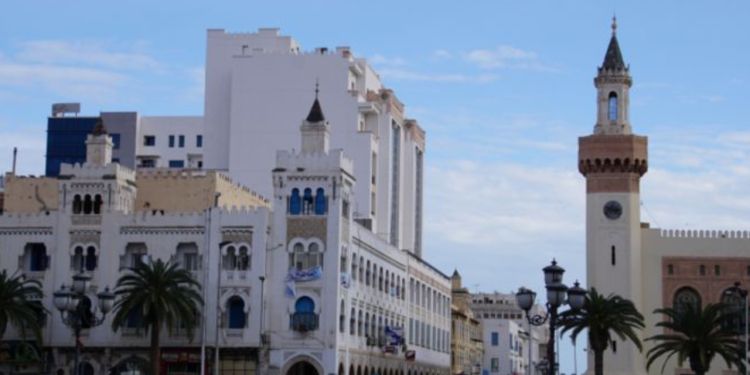
Work in Sfax
Located between the Sahel and Southern Tunisia, Sfax is, above all, a business, tourist, port and industrial city. It is thus deemed to be one of the ...
Higher Education: Universities and Academic Programs in Sfax
Sfax has established itself as a major educational center in Tunisia, anchored by the University of Sfax—one of North Africa's most respected public universities. The city attracts students from across Tunisia and internationally, creating a youthful, intellectual atmosphere that benefits the broader community.
University of Sfax
The University of Sfax, founded in 1986, ranks among Tunisia's premier higher education institutions. With approximately 33,000 enrolled students across 19 higher education institutions, including five faculties, three colleges, and twelve institutes, the university offers comprehensive programs from undergraduate through doctoral levels. The institution maintains a highly selective admission process, with acceptance rates between 0-9% for certain programs. Notable faculties include Medicine, Engineering, Economics, and Sciences. The university hosts over 1,200 international students and maintains partnerships with institutions in France, Canada, Belgium, Spain, Italy, Germany, and Japan. Tuition at public universities remains minimal for residents, typically under USD 500 annually.
International School of Business (ISB)
Located in the Sfax Technopark, the International School of Business offers English-language business programs accredited by the International Accreditation Council for Business Education (IACBE)—the first such accreditation in Tunisia. ISB provides undergraduate and graduate programs, including an MBA delivered entirely in English. The school emphasizes American teaching methodologies and maintains partnerships with international universities.
For official information and admissions, visit: University of Sfax | International School of Business
Education for Families: Schools and Enrollment in Sfax
Families relocating to Sfax will find educational options ranging from local Tunisian schools to international institutions offering curricula familiar to expatriate children. Understanding the school system helps parents make informed decisions about their children's education.
Tunisian Public Education System
Tunisia's education system follows a structure modeled on the French system. Schooling is compulsory and free from ages 6 to 16, comprising six years of primary education followed by three years of preparatory (middle) school. Secondary education spans four years, culminating in the baccalauréat examination—similar to A-levels or the high school diploma. Arabic serves as the primary language of instruction, with French introduced early and English from seventh grade. Public schools maintain good academic standards, though instruction in Arabic may present challenges for non-Arabic-speaking families.
International School Options
The International Academy of Sfax (IAS) offers an American-style curriculum with instruction in English, French, and Arabic. The school employs native English-speaking teachers and emphasizes multilingual education, critical thinking, and global perspectives. IAS serves students from early childhood through secondary levels, making it the primary international option within the city. For families seeking British curriculum schools, the nearest options are located in Tunis, including the British International School of Tunis (BIST) and the American Cooperative School of Tunis (ACST). These schools offer internationally recognized qualifications including IGCSEs, A-levels, and the International Baccalaureate.
For enrollment information: International Academy of Sfax
Finding a Home: Housing and Neighborhoods in Sfax
Sfax offers remarkably affordable housing compared to Tunis and coastal resort cities. The rental market provides options from modern apartments in newer districts to traditional properties near the historic medina. Understanding neighborhood characteristics helps newcomers find suitable accommodation.
Popular Neighborhoods for Residents
The city center surrounds the historic medina and offers proximity to markets, restaurants, and commercial services. Modern apartments here suit professionals wanting walkable urban living. Route Soukra and areas toward the Technopark attract younger professionals and families, offering newer construction with contemporary amenities. Sakiet Eddaier provides more residential settings with reasonable prices. Coastal areas near Chaffar Beach appeal to those seeking proximity to the Mediterranean. For families prioritizing space, suburban developments offer larger properties with parking and gardens.
Rental Prices and Procedures
Sfax housing costs significantly below Tunisian averages. A one-bedroom apartment in the city center typically rents for TND 400-600 (approximately USD 130-195) monthly, while three-bedroom apartments range from TND 700-1,200 (USD 230-390). Furnished rentals command modest premiums. Property prices average approximately TND 1,464/m² in central Sfax. Rental agreements typically require a security deposit equal to one or two months' rent. Leases are generally annual, though shorter arrangements can be negotiated. Most landlords prefer payment in Tunisian dinars.
Sources: Numbeo, Properstar
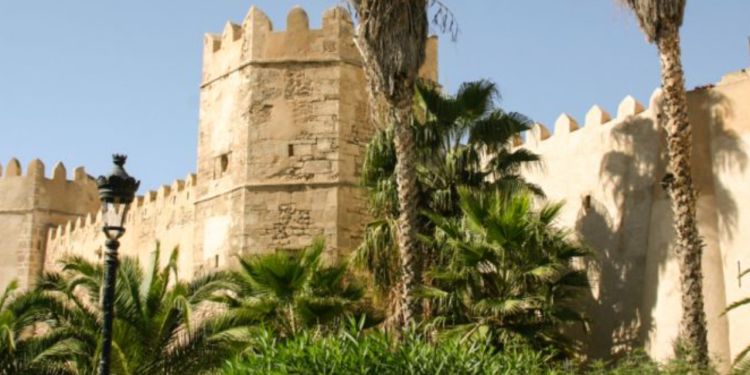
Accommodation in Sfax
Nicknamed the "Southern Capital City", Sfax is the second Tunisian metropolis and the major economic hub. Famous for its economic dynamism ...
Leisure and Culture: Things to Do in Sfax
Sfax offers a rich tapestry of cultural experiences, from exploring its remarkably preserved medina to enjoying Mediterranean beaches and day trips to world-famous historical sites. The city rewards those seeking authentic encounters over tourist-oriented attractions.
Historical and Cultural Attractions
The Medina of Sfax stands as Tunisia's most authentic walled old town, dating back 1,200 years. Its narrow streets remain alive with artisan workshops, spice markets, and traditional commerce largely unchanged for centuries. Key sites include the Great Mosque of Sfax, featuring impressive carved decorations on its minaret, and Dar Jellouli Museum, a 17th-century merchant's palace showcasing regional folk art and traditions. The Kasbah Museum, housed in an ancient fortress, displays exhibits on traditional Sfaxian architecture and craftsmanship. The Archaeological Museum in City Hall presents Roman mosaics from ancient Taparura and Thaenae. Newer cultural venues like Dar Baya offer rooftop cafés hosting concerts and storytelling events, representing the medina's contemporary revival.
Day Trips and Outdoor Activities
The Kerkennah Islands, accessible by a quick ferry ride, offer pristine beaches and traditional fishing villages ideal for weekend escapes. The El Jem Amphitheatre, located one hour north, ranks among the world's largest and best-preserved Roman amphitheaters—a UNESCO World Heritage Site. Coastal destinations including Mahdia (two hours) and Sousse (under two hours) provide beach resorts and additional historical attractions. Within Sfax, Plage Casino and Chaffar Beach offer Mediterranean swimming, while the Sfax fish market provides a photogenic glimpse into the city's maritime heritage. Sports enthusiasts can follow local football at CS Sfax matches or enjoy equestrian activities at regional clubs.
Everyday Life: Transportation and Local Culture
Daily life in Sfax moves at a relaxed Mediterranean pace, blending traditional Tunisian customs with modern conveniences. Understanding transportation options and cultural norms helps newcomers adapt smoothly to their new environment.
Getting Around Sfax
Public transportation in Sfax centers on buses and taxis. City buses serve major routes at fares of approximately TND 0.50-1.00 per ride, though schedules can be irregular. Taxis provide the most practical option for daily commuting, with downtown trips costing under TND 2.00 (approximately USD 0.65). Metered fares apply, with rates doubling between 9 PM and 6 AM. Louages—shared minivans—connect Sfax to other Tunisian cities affordably. The Sfax Railway Station offers connections to Tunis (approximately 4.5 hours), Sousse, and southern cities. Sfax-Thyna International Airport, located 6 km from the city center, handles domestic flights to Tunis, Djerba, and Tozeur, plus international connections via Tunisair. Ferries depart regularly for the Kerkennah Islands, a 20-minute crossing.
Cultural Customs and Daily Rhythms
Sfax maintains strong traditional values as a predominantly Muslim city. Shops and businesses typically observe a midday break, with many closing from approximately 1 PM to 4 PM during summer months. Friday prayers bring a quieter atmosphere, particularly around mosques. The local dialect blends Arabic with French expressions. Sfaxians are known for their entrepreneurial spirit and hospitality toward visitors. Traditional markets in the medina remain active for daily shopping, while modern supermarkets serve contemporary needs. Coffee culture thrives in both traditional cafés and newer establishments. Residents generally dress conservatively, particularly in older neighborhoods.
Budgeting for Sfax: Cost of Living Breakdown
Sfax ranks among the world's most affordable cities, with living costs approximately 60% lower than comparable cities in the United States and significantly below European averages. Careful budgeting allows for comfortable living on modest incomes.
Monthly Budget for a Single Person
The following estimates reflect typical expenses for a single professional living in central Sfax:
Expense Category | Monthly Cost (TND) | Monthly Cost (USD) |
Rent (1-bedroom, city center) | 500 | 165 |
Utilities (electricity, water, gas) | 150 | 50 |
Groceries | 400 | 130 |
Transportation | 100 | 33 |
Internet and mobile | 80 | 26 |
Dining and leisure | 200 | 65 |
Total | 1,430 | ~470 |
Monthly Budget for a Family of Four
Families should anticipate the following monthly expenses:
Expense Category | Monthly Cost (TND) | Monthly Cost (USD) |
Rent (3-bedroom, city center) | 900 | 295 |
Utilities | 250 | 82 |
Groceries | 800 | 260 |
Transportation | 200 | 65 |
International school fees | 1,500 | 490 |
Health insurance | 400 | 130 |
Leisure and miscellaneous | 400 | 130 |
Total | 4,450 | ~1,450 |
Sources: Numbeo 2024, LivingCost.org
In Short
Sfax offers expatriates an opportunity to experience genuine Tunisian life in a city that balances historical charm with economic vitality. As the country's second-largest city and primary commercial hub outside Tunis, it provides career opportunities while maintaining an exceptionally affordable cost of living. The remarkably preserved medina, strong university presence, and proximity to Mediterranean beaches and UNESCO World Heritage sites create a rich environment for personal and professional growth. While Sfax may lack the tourist infrastructure of coastal resorts, it rewards residents with authenticity, warmth, and a true sense of community. Ready to start your Sfax adventure? Connect with fellow expatriates and get practical advice on the Expat.com Tunisia forum.
We do our best to provide accurate and up to date information. However, if you have noticed any inaccuracies in this content, please contact us.