Living in Phnom Penh: the ultimate expat guide
Everything you need to know for a successful life in Phnom Penh.
Phnom Penh, Cambodia's capital and largest city, sits at the confluence of three rivers: the Mekong, Tonlé Sap, and Bassac. Known as the "Pearl of Asia", this city of approximately 2.3 million people blends French colonial architecture with traditional Khmer heritage and modern development. The city has undergone remarkable transformation since the 1990s, emerging as a dynamic hub for expatriates, entrepreneurs, and retirees seeking an affordable yet fulfilling lifestyle in Southeast Asia.
Why Expats Choose Phnom Penh
The Cambodian capital attracts a diverse international community drawn by its low cost of living, straightforward visa regulations, and welcoming local culture. Unlike many regional capitals, Phnom Penh maintains a manageable pace of life while offering modern amenities, international dining, quality healthcare, and a thriving social scene. The city serves as the country's economic, political, and cultural center, providing numerous opportunities for both career-focused professionals and those seeking a relaxed retirement.
5 Good Reasons to Move to Phnom Penh
- Affordable living costs – Monthly expenses are significantly lower than major Western cities, with comfortable lifestyles achievable on modest budgets.
- Simple visa process – Cambodia offers one of Asia's most accessible long-term visa systems, with renewable business and retirement visas available.
- USD-based economy – The widespread use of US dollars eliminates currency exchange complications for many expats.
- Growing expat community – Over 100,000 expatriates call Phnom Penh home, creating established support networks and social opportunities.
- Strategic Southeast Asian location – Easy access to regional destinations including Thailand, Vietnam, and beyond.
Working in Phnom Penh: Employment and Career Opportunities
Phnom Penh's economy has experienced substantial growth in recent years, creating diverse employment opportunities for foreign professionals. The city serves as Cambodia's commercial hub, hosting multinational corporations, international NGOs, startups, and a growing technology sector. Understanding the local job market and visa requirements is essential for anyone planning to work in the Cambodian capital.
Key Employment Sectors
The garment and textile industry remains Cambodia's economic backbone, though this sector primarily employs local workers. For expatriates, opportunities concentrate in information technology, where senior software developers can earn $3,000–$4,000 per month. The finance and banking sector is expanding rapidly, with senior positions commanding $2,000–$4,000 monthly. Construction and engineering roles pay $1,000–$3,000 monthly for qualified professionals. The hospitality and tourism industry, education (particularly English teaching), and NGO work also provide significant employment for foreigners.
Work Permits and Visas
Foreign workers require an E-class visa (ordinary visa) and a work permit with employment card issued by the Ministry of Labour and Vocational Training (MLVT). The EB visa is the most common extension for employed foreigners. Employers must apply for work permits through the Foreign Workers Centralised Management System (FWCMS). Processing typically takes 7–10 business days, and permits require annual renewal between January and March.
The following table summarizes key employment indicators for Phnom Penh:
Unemployment rate (2024) | 0.27% |
Average salary (IT sector) | $500–$4,000/month |
Minimum wage (garment sector) | $204/month |
Work permit fee | ~$100–150/year |
EB visa extension (12 months) | $285 |
Sources: Trading Economics, ILO, Ministry of Labour and Vocational Training
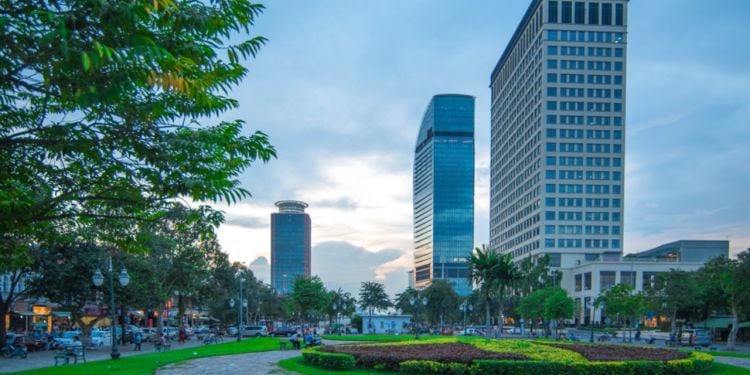
Working in Phnom Penh
When it comes to expat living, Phnom Penh has it all. Thanks to an influx of foreign investment ...
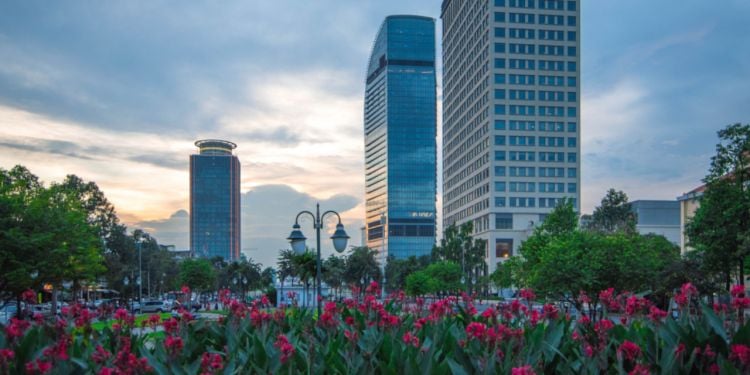
The labour market in Phnom Penh
As a new expat in Phnom Penh, one of the most important things you will need is a job. Continue ...

The work culture in Phnom Penh
Learning the customs of a new work environment can be difficult, especially if you are doing it in ...
Higher Education and Universities in Phnom Penh
Phnom Penh hosts Cambodia's most comprehensive higher education landscape, with over 35 universities offering programs ranging from undergraduate degrees to doctoral studies. The sector has developed significantly since the country's educational system was rebuilt following the Khmer Rouge era, and today includes both public institutions and private universities catering to local and international students.
Leading Universities
The Royal University of Phnom Penh (RUPP), founded in 1960, ranks as Cambodia's top public university with approximately 10,000–15,000 students. It offers programs in sciences, humanities, and social sciences, recognized by the Ministry of Education, Youth and Sports. The American University of Phnom Penh (AUPP), established in 2013, provides US-accredited curricula with partnerships allowing dual degrees from American institutions including Fort Hays State University and the University of Arizona. The Institute of Technology of Cambodia specializes in engineering and technical programs.
International Programs and Admission
Several universities offer English-taught programs attracting international students. Limkokwing University of Creative Technology operates a Phnom Penh campus offering creative and business programs. Tuition fees at private universities typically range from $1,500–$4,000 per year, significantly lower than equivalent programs in Western countries. Public university fees are even more affordable. International students require an ES visa (student visa), obtainable with proof of enrollment and financial means. Admission generally requires high school completion (equivalent to A-levels or high school diploma), English proficiency for English-taught programs, and institution-specific entrance requirements.
Sources: Royal University of Phnom Penh, American University of Phnom Penh, Ministry of Education, Youth and Sports


Retirement in Phnom Penh: A Popular Destination for Retirees
Cambodia has emerged as an increasingly attractive retirement destination, recognized in International Living's 2024 Annual Global Retirement Index as a top-tier option in Asia. Phnom Penh offers retirees an affordable lifestyle, straightforward visa procedures, quality private healthcare, and a welcoming expatriate community. The city provides modern amenities while maintaining the charm and lower costs that draw retirees seeking to stretch their retirement funds.
ER Retirement Visa
Foreign nationals aged 55 and over can apply for the ER (Retirement) visa extension, which grants residency for 12 months with unlimited entries and exits. To qualify, applicants must provide proof of retirement (pension documentation or social security records) and demonstrate sufficient financial means to support themselves. The process begins with obtaining an E-class visa ($35), then extending to the ER category through the Immigration Department or a visa agency. The ER extension costs approximately $275–$300 per year and can be renewed indefinitely. ER visa holders cannot work in Cambodia but enjoy the freedom to live anywhere in the country.
Healthcare and Practical Considerations
Phnom Penh's healthcare sector has improved significantly, with private facilities like Royal Phnom Penh Hospital, Sunrise Japan Hospital, and clinics such as Intercare providing quality care. Many retirees maintain health insurance covering both local and regional treatment, as some travel to Thailand or Singapore for complex procedures. Dental care is affordable and generally good quality, with scaling from $30 and implants around $1,000. Cambodia does not tax foreign pensions, and there is no capital gains tax on foreign assets. Foreigners cannot own land but may own strata-title condominiums. A comfortable retirement in Phnom Penh is achievable on $1,000–$1,500 monthly.
Sources: General Department of Immigration, Cambodia, Khmer Times, International Living
Schooling for Children: International and Local Education
Phnom Penh offers an expanding selection of international schools providing quality education following American, British, Canadian, Australian, and International Baccalaureate curricula. While local Cambodian schools exist, most expatriate families choose international institutions for their higher educational standards, English instruction, and globally recognized qualifications.
Top International Schools
The International School of Phnom Penh (ISPP), founded in 1989, is Cambodia's oldest and most established international school. This non-profit institution offers the International Baccalaureate (IB) program from early years through Grade 12, with accreditation from WASC and the Council of International Schools. The 6-hectare campus features an Olympic-sized swimming pool, 430-seat theatre, and extensive sports facilities. Annual tuition ranges from $7,700 to $24,000 depending on grade level.
The Canadian International School of Phnom Penh (CIS) provides Alberta curriculum education from preschool through Grade 12, with fees from $6,600 to $19,400. iCAN British International School offers the British National Curriculum at more moderate prices ($5,000–$13,000). Northbridge International School Cambodia, part of the Nord Anglia network, provides IB programs with tuition from $6,000 to $24,000. The Australian International School of Phnom Penh (AISPP) offers IB programs with WASC and CIS accreditation.
Enrollment and Considerations
Most international schools require application fees ($100–$250) and entrance fees ($1,000–$3,500) in addition to tuition. Waiting lists exist at popular schools, so early application is recommended. Schools typically follow the Northern Hemisphere academic calendar (August–June). Many offer school bus services, after-school activities, and support for students with learning differences.
Sources: International School of Phnom Penh, Canadian International School, Northbridge International School
Housing and Neighbourhoods: Finding Your Home in Phnom Penh
Phnom Penh's property market offers diverse housing options ranging from modern high-rise condominiums to traditional villas and renovated shophouses. Rental prices remain considerably lower than most regional capitals, though premium expatriate areas command higher rates. Understanding the city's distinct neighborhoods helps newcomers find accommodation suited to their lifestyle and budget.
Popular Expat Neighbourhoods
BKK1 (Boeung Keng Kang 1) remains the premier expatriate district, offering international restaurants, boutique shops, gyms, and proximity to embassies and international schools. One-bedroom apartments here range from $500–$1,000 monthly, with luxury options higher. Tonle Bassac, adjacent to BKK1, has emerged as a trendy alternative with modern condominiums, the AEON Mall, and the popular Bassac Lane dining area. Expect $400–$800 for one-bedroom units. Toul Tom Poung (Russian Market area) offers a hip, affordable neighborhood with character, where one-bedroom apartments cost $300–$600. Toul Kork suits families seeking larger properties with gardens at more moderate prices ($600–$1,500 for houses).
Rental Prices and Procedures
The following table shows typical rental costs across property types:
1-bedroom (city center) | $480–$700/month |
1-bedroom (outside center) | $265–$400/month |
3-bedroom apartment | $1,200–$2,500/month |
Villa with garden | $1,800–$4,000/month |
Leases typically require one to two months' deposit plus one month's rent in advance. Rentals are commonly priced in US dollars. Utilities (electricity, water, internet) usually add $70–$200 monthly depending on air conditioning usage. Many serviced apartments include utilities in the rent.
Sources: Numbeo, IPS Cambodia
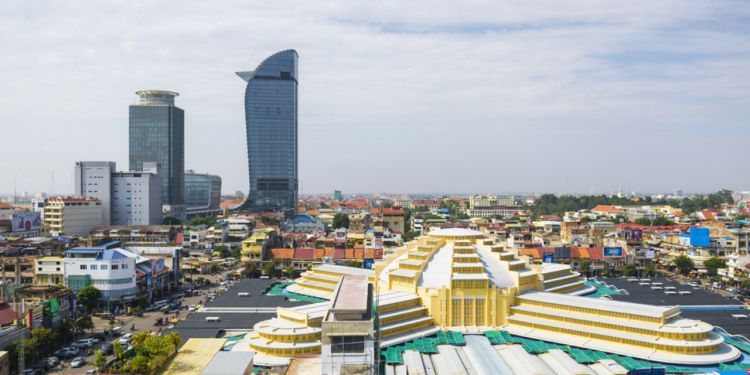
Accommodation in Phnom Penh
Phnom Penh provides a range of accommodation for foreigners, along with a unique and lively ...
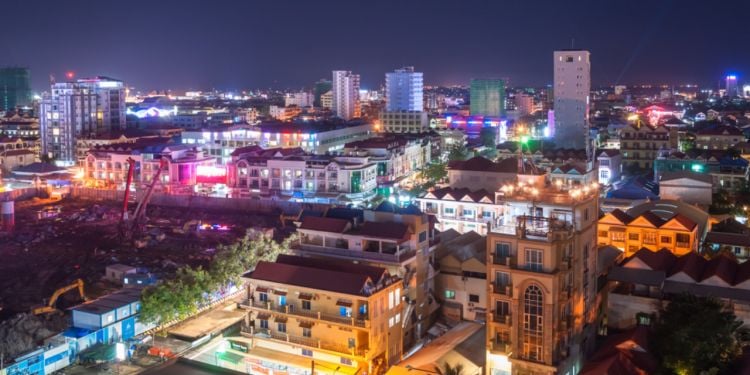
Buying property in Phnom Penh
Finding accommodation in a new country or city can be a daunting task, but it doesn't have to ...
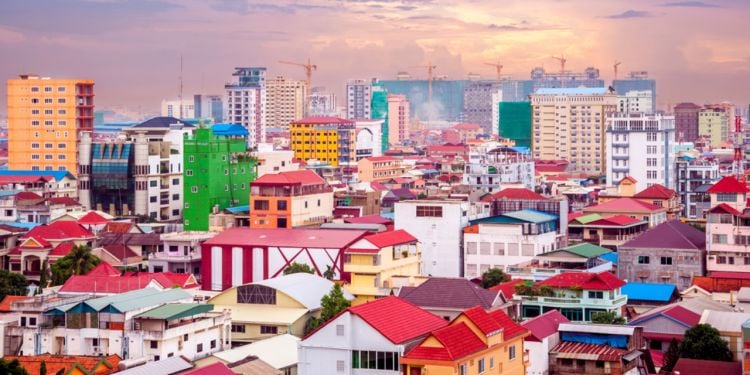
Popular neighbourhoods in Phnom Penh
As a new expat in Phnom Penh, you are going to need to know the best neighbourhoods to live in for ...
Leisure, Culture, and Things to Do in Phnom Penh
Phnom Penh offers a compelling mix of historical sites, cultural experiences, modern entertainment, and a thriving culinary scene. From poignant memorial sites that tell Cambodia's complex story to riverside bars and contemporary art galleries, the city provides diverse opportunities for leisure and cultural enrichment.
Museums and Cultural Attractions
The Royal Palace, still the residence of King Norodom Sihamoni, showcases stunning Khmer architecture and houses the Silver Pagoda with its floor of 5,329 silver tiles. The National Museum of Cambodia, built in 1920, contains the world's largest collection of Khmer art including Angkorian sculptures. The Tuol Sleng Genocide Museum (former S-21 prison) and Choeung Ek Killing Fields offer sobering but essential insights into Cambodia's Khmer Rouge history. Wat Phnom, the temple that gave the city its name, provides peaceful grounds for reflection. The innovative Sosoro Museum explores the fascinating connections between money, politics, and power in Cambodian history.
Entertainment, Dining, and Social Life
The Riverside area along Sisowath Quay offers riverfront restaurants, bars, and the bustling Night Market with street food and live performances. Bassac Lane in Tonle Bassac has emerged as a trendy hub of cocktail bars and restaurants. Central Market (Phsar Thmei), an Art Deco landmark from 1937, and the Russian Market (Phsar Toul Tom Poung) offer everything from souvenirs to local handicrafts. AEON Mall provides modern shopping and entertainment. For nightlife, areas like Street 51 and various rooftop bars cater to diverse tastes. Sunset cruises on the Mekong and Tonlé Sap rivers provide romantic evening entertainment. Sports facilities, yoga studios, and fitness centers throughout expatriate neighborhoods support active lifestyles.
Sources: Tourism Cambodia, Phnom Penh Guide
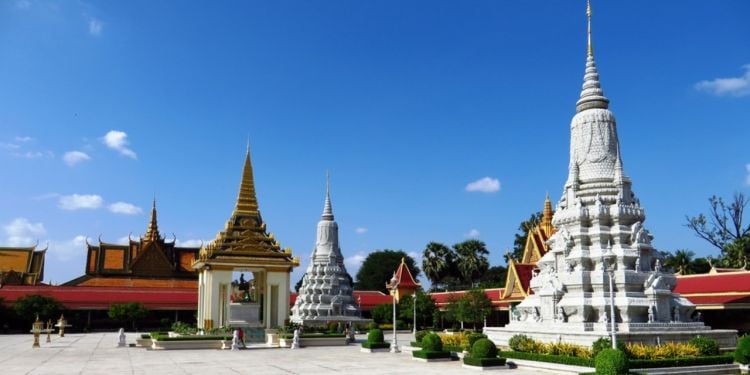
Things to do on weekdays in Phnom Penh
Phnom Penh is rapidly developing into an international capital city. While it used to be a literal ...
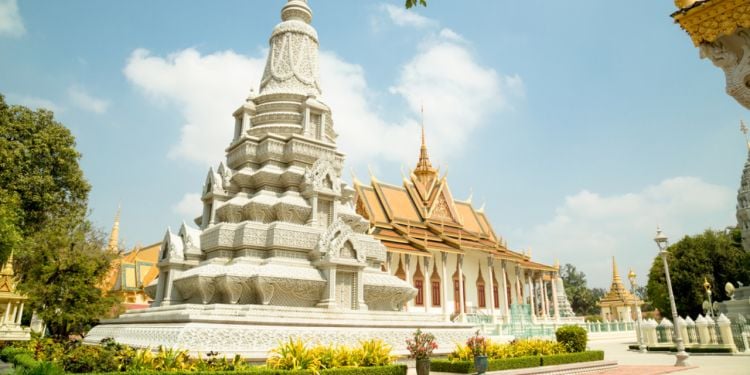
Things to do alone, with family and friends or with a partner in Phnom Penh
There are many things in Phnom Penh that you can do alone, with friends and family, or with a ...

Sports in Phnom Penh
Sports and fitness are generally very popular in Western countries, but they are not as big of a ...
Daily Life in Phnom Penh: Transport, Culture, and Practicalities
Daily life in Phnom Penh blends Southeast Asian energy with a surprisingly manageable pace. The city lacks a metro or extensive public transit system, but affordable transportation options and the widespread use of ride-hailing apps make getting around straightforward. Understanding local customs and practical aspects of daily living helps newcomers adapt quickly to their new home.
Getting Around
The tuk-tuk (locally called remorque) remains the iconic way to navigate Phnom Penh, offering open-air rides for $1–$5 depending on distance. Ride-hailing apps have transformed transportation: Grab and the local PassApp provide reliable, meter-priced rides via tuk-tuk, rickshaw, or air-conditioned car. A typical 4km journey costs around $1.70–$3. Tada offers electric tuk-tuks and ethical driver compensation. Motorcycle taxis (moto) provide the fastest option through traffic for $1–$2 for short trips. The city has a limited public bus network with affordable fares under $1, though routes primarily serve local commuters. Many expats purchase or rent motorbikes ($50–$70/month rental) for independence, though traffic requires confidence and caution.
Cultural Considerations and Daily Practicalities
Phnom Penh operates on a dual currency system using both US dollars and Cambodian riel (approximately 4,000 KHR = $1). Only USD bills are used; riel covers small change. ATMs dispense dollars, and cashless payment via bank QR codes is increasingly common. The tropical climate means hot and humid conditions year-round, with a rainy season from May to October. Air conditioning is essential for most expats. English is widely spoken in expatriate areas, international businesses, and tourist zones, though learning basic Khmer phrases is appreciated. Cambodians are generally warm and welcoming toward foreigners. Business hours typically run 8am–5pm weekdays, though shops and restaurants operate longer.
Sources: Grab Cambodia, Move to Cambodia
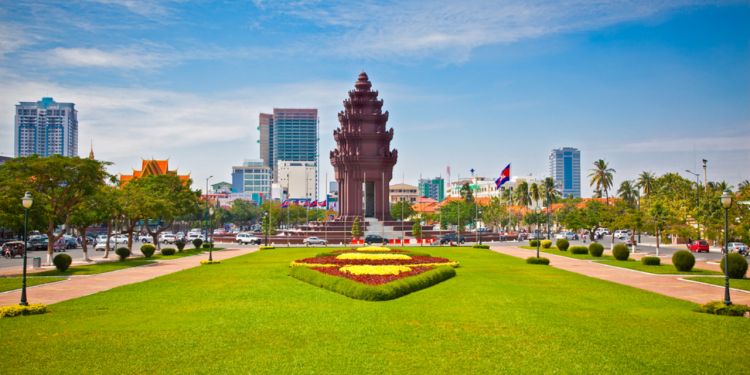
Discovering Phnom Penh
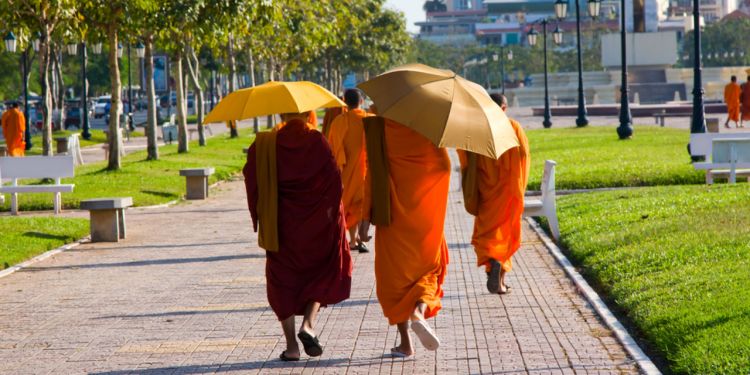
After endless hours of personal research, you decided to take the plunge and move to Cambodia. ...
Adjusting to the culture in Phnom Penh
One of the best ways to enjoy being an expat in Phnom Penh is to embrace the local culture and do ...

Developing your social circle in Phnom Penh
Moving to a city where you have no friends or family can be daunting. Thankfully, Phnom Penh has a ...
Cost of Living in Phnom Penh: Budgets and Expenses
Phnom Penh ranks as one of Southeast Asia's more affordable capitals, though costs have risen in recent years. According to Numbeo's 2025 Cost of Living Index, Phnom Penh is the fourth most expensive city in ASEAN, yet remains significantly cheaper than Western cities. The widespread use of US dollars simplifies budgeting for many expatriates. A comfortable lifestyle is achievable on modest means, though luxury living is also available for those with larger budgets.
Monthly Budget for a Single Person
The following table estimates monthly expenses for a single expatriate living a comfortable lifestyle in central Phnom Penh:
Expense Category | Budget | Comfortable |
Rent (1-bedroom) | $300 | $550 |
Utilities | $50 | $100 |
Groceries | $150 | $250 |
Dining out | $100 | $200 |
Transportation | $50 | $100 |
Health insurance | $80 | $150 |
Entertainment/misc | $100 | $200 |
Total | $830 | $1,550 |
Monthly Budget for a Family of Four
The following table estimates expenses for a family of four with school-age children:
Expense Category | Moderate | Comfortable |
Rent (3-bedroom) | $1,200 | $2,000 |
Utilities | $150 | $250 |
Groceries | $400 | $600 |
International school (2 children) | $1,200 | $2,500 |
Transportation | $150 | $250 |
Health insurance | $300 | $500 |
Entertainment/misc | $300 | $500 |
Total | $3,700 | $6,600 |
Sources: Numbeo 2025, Khmer Times
In Short
Phnom Penh offers expatriates a unique blend of affordability, accessibility, and authentic Southeast Asian living. Whether you're pursuing career opportunities, raising a family, or enjoying retirement, Cambodia's capital provides a welcoming environment with a supportive international community. The city's straightforward visa system, USD-based economy, diverse neighborhoods, and improving infrastructure make it an increasingly appealing destination for those seeking adventure without sacrificing comfort. From the tree-lined streets of BKK1 to the riverside charm of Tonle Bassac, Phnom Penh rewards those who embrace its energy and contradictions. Ready to connect with fellow expatriates and learn more about life in Phnom Penh? Join the conversation on the Expat.com Phnom Penh forum to share experiences, ask questions, and become part of this welcoming community.
We do our best to provide accurate and up to date information. However, if you have noticed any inaccuracies in this content, please contact us.