Living in Odense: the ultimate expat guide
Everything you need to know for a successful life in Odense.
Odense, Denmark's third-largest city, sits on the island of Funen and combines fairy-tale charm with modern innovation. Home to approximately 185,000 residents, this vibrant city is best known as the birthplace of Hans Christian Andersen and as Europe's leading robotics hub. With cobblestone streets, cutting-edge technology companies, and an exceptional quality of life, Odense offers expatriates a unique blend of history and progress. The city features excellent educational institutions, affordable living compared to Copenhagen, and a strong international community supported by the University of Southern Denmark.
5 Good Reasons to Move to Odense
- Thriving robotics industry – Odense is recognized as Europe's premier robotics ecosystem, hosting over 130 companies including Universal Robots and Mobile Industrial Robots, with more than 4,600 employees and over €900 million in investments as of 2023.
- Affordable quality of life – Living costs are approximately 20-25% lower than Copenhagen while maintaining high standards in healthcare, education, and public services.
- Strong international community – With the University of Southern Denmark welcoming students from over 50 countries and numerous international families, expatriates find a welcoming environment.
- Cultural richness – The city celebrates its literary heritage through world-class museums, annual festivals, and a vibrant arts scene while maintaining authentic Danish traditions.
- Excellent connectivity – Located centrally in Denmark, Odense is just 90 minutes by train from Copenhagen and offers easy access to the rest of Scandinavia and Europe.
Working in Odense
Odense's economy has evolved from traditional manufacturing into a technology and innovation powerhouse, particularly in robotics, healthcare technology, and engineering. The city's unemployment rate stands at approximately 2.6% (net unemployment), one of the lowest in Europe, reflecting strong demand for skilled professionals. Major employers include Universal Robots, Odense University Hospital, the University of Southern Denmark, and numerous engineering and technology firms clustered around the robotics ecosystem.
Key Industries and Opportunities
The robotics sector dominates Odense's employment landscape, with companies specializing in collaborative robots, automation solutions, and artificial intelligence. Beyond robotics, the city offers opportunities in healthcare technology (linked to the new Odense University Hospital), precision engineering, renewable energy, and business services. The University of Southern Denmark generates demand for academic positions and research roles across multiple disciplines. International companies value multilingual professionals who can navigate both Danish and English-speaking environments.
Work Permits and Employment Regulations
Citizens of EU/EEA countries and Switzerland can work in Denmark without a permit but must register with SIRI (Danish Agency for International Recruitment and Integration) within three months. Non-EU/EEA nationals require a work permit before starting employment. The most common schemes include the Fast-Track Scheme (for certified companies), the Pay Limit Scheme (requiring annual salaries exceeding DKK 448,000), and the Positive List (for shortage occupations including engineers, IT specialists, and healthcare professionals). Processing times typically range from one to three months, with fees around DKK 10,330 (approximately USD 1,500) for residence permits.
Unemployment rate (net) | 2.6% |
Average monthly salary (gross) | DKK 47,000-51,000 (USD 6,500-7,000) |
Key sectors | Robotics, healthcare technology, engineering |
Sources: Trading Economics Denmark, Statistics Denmark

Working in Odense
Located on the large island of Funen (Fyn) which connects Jutland and Zealand is Odense, one of Denmark's larger cities with a population of 175,000 ...
Higher Education & Universities
The University of Southern Denmark (SDU), founded in 1966, serves as Odense's premier institution for higher education and research. With its main campus in Odense and additional locations across southern Denmark, SDU enrolls over 27,000 students, including approximately 20% international students from more than 50 countries. The university offers around 115 study programs spanning five faculties: humanities, social sciences, natural sciences, health sciences, and engineering.
Programs and International Opportunities
SDU provides programs taught in English at both undergraduate and graduate levels, particularly in engineering, business, health sciences, and natural sciences. The university maintains strong connections with the local robotics industry, offering students internships and research opportunities with companies like Universal Robots and OnRobot. Notable programs include robotics engineering, software development, business administration, biomedical sciences, and international relations. The campus features modern facilities physically connected to Odense University Hospital, creating unique opportunities for health sciences students.
Tuition and Admission
Students from EU/EEA countries and Switzerland attend tuition-free, while non-EU/EEA students typically pay annual fees ranging from DKK 45,000 to DKK 120,000 (approximately USD 6,500-17,500) depending on the program. Admission requirements include recognized secondary education certificates (equivalent to Danish gymnasium), English proficiency tests (IELTS 6.5 or TOEFL iBT 83 minimum), and program-specific prerequisites. The university guarantees accommodation for international students in some locations, and application deadlines typically fall in January-March for autumn admission. SDU ranks among the top 50 young universities worldwide and holds AACSB accreditation for its business school.
Official website: University of Southern Denmark
Schooling for Children
Odense provides quality educational options for international families, combining Danish public schools with international alternatives. The Danish education system emphasizes holistic development, combining academic learning with social skills and creativity. Education is compulsory for children aged 6 to 16, and public schools are free for residents. However, many expatriate families prefer international schools offering instruction in English and recognized international curricula.
International School Options
Odense International School (OIS), the primary international institution, operates as the international department of Henriette Hørlücks School. Located at Slotsvænget 1-3, OIS serves children aged 5 to 16 (Primary 1 through Secondary 11) and enrolls approximately 237 students from over 40 nationalities. The school follows the Cambridge International Examinations curriculum, with students completing IGCSE qualifications in their final two years. OIS emphasizes enquiry-based learning, maintains an average class size of 20 students (maximum 24), and offers instruction entirely in English. Annual tuition ranges from DKK 42,000 to DKK 44,000 (approximately USD 6,100-6,400), significantly lower than international schools in Copenhagen.
Danish Public Schools and Enrollment
Families choosing Danish public schools benefit from free education and deep integration into local culture, though instruction is primarily in Danish. Most schools offer Danish-as-a-second-language classes for international children. Enrollment requires registration with the local municipality using your CPR number (civil registration number), typically obtained after establishing residence. The Danish school year runs from mid-August to late June, and schools emphasize outdoor activities, collaborative learning, and student well-being alongside academic achievement.
Official website: Odense International School
Housing & Neighbourhoods
Odense's housing market offers more affordable options compared to Copenhagen and Aarhus while maintaining high quality and accessibility. Rental properties range from modern apartments in the city center to family homes in suburban areas. The average rent per square meter stands at approximately DKK 105, making it possible to find comfortable accommodation within reasonable budgets. Both furnished and unfurnished options exist, with most rentals requiring a deposit equivalent to three months' rent plus prepaid rent.
Popular Neighborhoods for Expatriates
Odense C (City Center) attracts young professionals and students seeking proximity to shops, restaurants, and cultural attractions. This area features walkable streets, excellent public transport connections, and the highest rental prices. Odense M and Dalum offer residential charm with good schools and family-friendly amenities, popular among international families working at the university or hospital. Vollsmose and surrounding areas provide budget-friendly options with improving infrastructure, while neighborhoods near SDU campus attract academic staff and researchers. The new light rail (Odense Letbane) has enhanced connectivity, making previously remote areas more accessible.
Rental Costs and Procedures
A one-bedroom apartment in central Odense typically costs between DKK 7,000-10,000 per month (approximately USD 1,000-1,450), while a three-bedroom apartment ranges from DKK 12,000-15,000 monthly (approximately USD 1,750-2,200). Studios for students start around DKK 3,500-5,000 per month. Rental contracts usually specify utilities separately, adding approximately DKK 500-1,000 monthly for electricity, water, and heating. To secure housing, you'll need documentation including employment contract, proof of income, and valid ID. Popular platforms include BoligPortal, Boligzonen, and local real estate agencies. Competition exists for well-located properties, so responding quickly to listings proves essential.
Sources: BoligZonen Odense, Numbeo
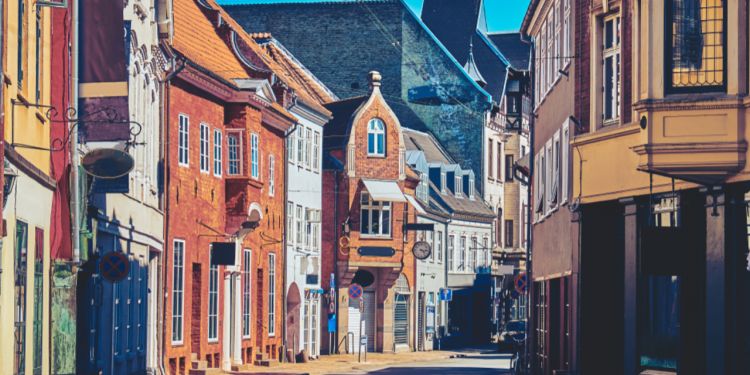
Accommodation in Odense
Most expats who find work in Odense enter the city's ever-growing ICT sector, while manufacturing and offshore activities also draw ...
Leisure, Culture & Things To Do
Odense celebrates its identity as the birthplace of Hans Christian Andersen, offering visitors and residents a rich cultural calendar throughout the year. The city balances its literary heritage with contemporary arts, outdoor recreation, and family-friendly attractions. Summer brings the Hans Christian Andersen Festival in August and the Tinderbox music festival in Tusindårsskoven forest, while the Odense International Film Festival attracts cinema enthusiasts annually.
Museums and Cultural Attractions
The H.C. Andersens Hus, opened in 2021 with architecture by Kengo Kuma, provides an immersive journey through the author's life and works. Ticket prices include access to his birthplace and childhood home, creating a comprehensive literary experience. The Funen Village (Den Fynske Landsby) offers open-air exhibitions of 19th-century life with historic buildings and demonstrations of traditional crafts. The Carl Nielsen Museum honors Denmark's most famous composer, while Brandts houses contemporary art exhibitions and photography. The Danish Railway Museum appeals to families with interactive displays and historic trains. Throughout the city, 16 sculptures inspired by Andersen's fairy tales dot parks and streets, creating an engaging outdoor treasure hunt.
Outdoor Activities and Sports
Odense's extensive network of parks and green spaces encourages outdoor living. Munke Mose, the city's central park, features walking paths, playgrounds, and sculptures from Andersen's tales. The Odense River (Odense Å) offers kayaking and riverside walks, while the city's cycling infrastructure supports both recreation and transportation. Odense Zoo operates year-round with Nordic and African animals attracting families. Sports enthusiasts can attend football matches at Nature Energy Park (home of Odense Boldklub) or ice hockey games. The nearby coastline and beaches of Funen provide summer swimming and sailing opportunities, accessible within 20-30 minutes.
Official tourism: Visit Odense, H.C. Andersens Hus
Daily Life
Daily life in Odense combines Scandinavian efficiency with a relaxed, community-oriented atmosphere. The city's compact size means most destinations lie within 15-20 minutes by bicycle or public transport, and locals prioritize work-life balance. Danes typically work 37 hours weekly, with flexible arrangements common in many industries. The culture values punctuality, directness, and equality, with minimal workplace hierarchy. Social life centers around "hygge" (cozy gatherings), outdoor activities, and cultural events.
Transportation and Mobility
The Odense Letbane (light rail), launched in 2022, connects the southern suburbs through the city center to the university and hospital areas, with tickets costing DKK 15 for 75 minutes (DKK 10 for under-26s). FynBus operates an extensive bus network, while route 10 offers free circular service through the city center every 10 minutes. Standard bus tickets cost DKK 24, and monthly passes provide unlimited travel. The Rejsekort smart card offers discounted fares across all public transport. Cycling dominates local transportation, with protected bike lanes throughout the city and free bicycle parking at most destinations. Train connections via DSB link Odense to Copenhagen (90 minutes, approximately DKK 200-300) and Aarhus (90 minutes).
Cultural Habits and Lifestyle
Odense residents embrace outdoor living regardless of weather, with parks and green spaces used year-round for exercise, socializing, and family activities. Grocery shopping typically occurs at discount chains like Netto, Rema 1000, or Fakta, with markets offering fresh produce on Wednesdays and Saturdays. Most transactions use MobilePay or cards, as cash is rarely accepted. Healthcare operates through the universal system, requiring registration with a local doctor (læge) using your CPR number. The city maintains a strong sense of community, with neighborhood associations, sports clubs, and cultural societies welcoming international residents.
Sources: Odense Letbane, FynBus
Cost of Living
Odense offers a high quality of life at costs approximately 20-25% lower than Copenhagen, making it an attractive option for expatriates seeking Danish living standards without capital city expenses. While Denmark ranks as the fourth most expensive country in Europe, Odense's position as a mid-sized city provides better value for housing, transportation, and daily expenses. Salaries align with Denmark's national standards, ensuring comfortable living for employed professionals.
Monthly Budget for a Single Person
A single person living in Odense can expect monthly expenses excluding rent of approximately DKK 8,000-10,000 (USD 1,150-1,450). Adding rent for a one-bedroom apartment (DKK 7,000-10,000), total costs range from DKK 15,000-20,000 monthly (USD 2,200-2,900). Groceries typically cost DKK 2,500-3,200 per month when cooking at home, while public transport adds DKK 500-800 for regular users. Eating at inexpensive restaurants costs DKK 150-200 per meal, and a coffee shop visit runs DKK 40-50. Health insurance remains largely unnecessary for residents due to Denmark's universal healthcare system.
Expense Category | Monthly Cost (DKK) |
Rent (1-bedroom apartment, center) | 8,500 |
Utilities (electricity, water, heating) | 800 |
Groceries | 2,800 |
Public transport | 650 |
Internet & mobile | 400 |
Total (estimated) | 13,150 |
Sources: Numbeo, LivingCost.org
Family Budget (Two Adults, Two Children)
A family of four requires approximately DKK 28,500-35,000 monthly excluding rent (USD 4,150-5,100). Adding housing costs (DKK 12,000-15,000 for a three-bedroom apartment), total expenses reach DKK 40,500-50,000 monthly (USD 5,900-7,300). Public schools are free, but international schools like Odense International School charge around DKK 3,500 monthly per child. Childcare for younger children costs approximately DKK 2,500-3,500 monthly per child, though subsidies significantly reduce costs for residents. Families benefit from generous parental leave policies, child allowances (børnefamilieydelse), and subsidized activities through local municipalities.
Expense Category | Monthly Cost (DKK) |
Rent (3-bedroom apartment) | 13,500 |
Utilities | 1,200 |
Groceries (family of four) | 6,000 |
Public transport (family) | 1,200 |
International school (1 child) | 3,500 |
Childcare/activities | 2,000 |
Internet, mobile, insurance | 1,000 |
Total (estimated) | 28,400 |
Sources: Numbeo, Exploring Denmark
In Short
Odense offers expatriates a compelling combination of innovation, culture, and quality of life in Denmark's third-largest city. As Europe's leading robotics hub and the birthplace of Hans Christian Andersen, Odense balances cutting-edge technology with rich cultural heritage. The city provides excellent career opportunities, particularly in engineering and healthcare, while maintaining costs 20-25% lower than Copenhagen. With outstanding education through the University of Southern Denmark and international schools, efficient public transport including a modern light rail, and a welcoming international community, Odense proves ideal for professionals and families seeking authentic Danish living without capital city expenses. The combination of outdoor lifestyle, cultural attractions, and strong social services creates an environment where expatriates can thrive. Ready to start your Odense adventure? Join fellow expatriates in the Odense forum on Expat.com to connect with the community, ask questions, and get insider tips from those already living the Odense experience.
We do our best to provide accurate and up to date information. However, if you have noticed any inaccuracies in this content, please contact us.