Living in the Maryland: the ultimate expat guide
Everything you need to know for a successful life in the Maryland.
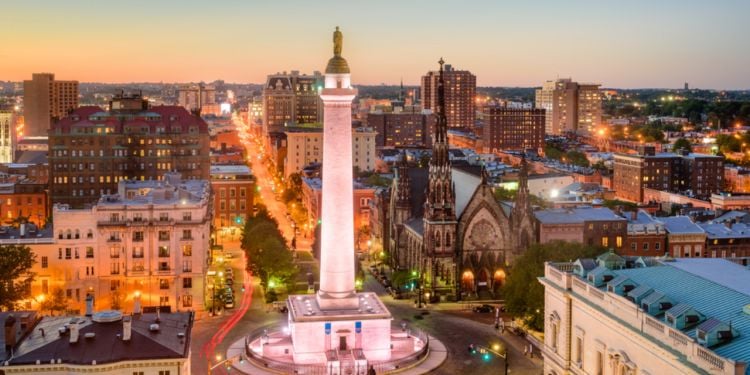
Maryland, often called "America in Miniature", offers an exceptional blend of urban energy, suburban comfort, and natural beauty. Situated on the Mid-Atlantic coast and bisected by the Chesapeake Bay, this compact state provides easy access to both Washington, D.C. and the Atlantic beaches. With a population of approximately 6.2 million, Maryland ranks among the wealthiest and most educated states in the nation. The state capital is Annapolis, a charming waterfront city with colonial architecture, while Baltimore serves as the cultural and economic hub. For expats, Maryland presents outstanding career opportunities in healthcare, biotechnology, federal government, and cybersecurity sectors. The state's strategic location within the Baltimore-Washington metropolitan area means residents enjoy world-class museums, dining, and entertainment within easy reach. Maryland's excellent public school system and prestigious universities make it particularly attractive for families and students seeking quality education.
5 Good Reasons to Move to Maryland
- Thriving job market – Maryland hosts 74 federal laboratories (more than any other state), major biotech companies along the I-270 corridor, and leading healthcare institutions like Johns Hopkins.
- Top-ranked education – Montgomery County Public Schools consistently rank among the nation's best, and the state is home to Johns Hopkins University and the University of Maryland system.
- Cultural diversity – Cities like Gaithersburg, Germantown, and Silver Spring rank among America's most diverse communities, offering a rich tapestry of cuisines, festivals, and traditions.
- Natural beauty – From the Chesapeake Bay's waterways to the Appalachian mountains in the west and Atlantic beaches on the Eastern Shore, outdoor recreation abounds year-round.
- Proximity to the capital – Living in Maryland provides easy access to Washington, D.C.'s world-class museums, monuments, and international community while enjoying lower living costs than the District.
Working in Maryland
Maryland offers a robust job market anchored by the federal government, healthcare, biotechnology, and cybersecurity industries. The state's proximity to Washington, D.C. creates abundant opportunities for professionals in policy, defense, and public administration. With an unemployment rate of approximately 3.4% in 2025, Maryland maintains one of the strongest labor markets in the nation.
Key Industries and Employers
The healthcare and life sciences sector dominates Maryland's economy, led by Johns Hopkins Hospital and the University of Maryland Medical System. The I-270 biotech corridor in Montgomery County hosts over 500 biotech firms and 2,000 life science companies, including MedImmune-AstraZeneca, Novavax, and emerging startups. Federal employment is substantial, with the National Institutes of Health (NIH) in Bethesda, the National Security Agency (NSA) at Fort Meade, and numerous defense contractors like Lockheed Martin and Northrop Grumman. The Port of Baltimore supports over 42,000 jobs in logistics and maritime services.
Work Permits and Visa Requirements
International workers typically require an H-1B visa for specialty occupations, which demands a bachelor's degree or equivalent and employer sponsorship. The annual cap is 65,000 visas, with an additional 20,000 reserved for holders of U.S. master's degrees. Processing involves Labor Condition Application (LCA) certification and can take 3-6 months. Cap-exempt employers include universities and research institutions like NIH and Johns Hopkins. The L-1 visa allows intra-company transfers, while the O-1 visa serves individuals with extraordinary ability.
The following table presents key employment indicators for Maryland:
Unemployment Rate (2025) | 3.4% |
Average Weekly Wage | $1,493 - $2,051 |
Key Sectors | Healthcare, Biotech, Federal Government, Cybersecurity, Defense |
Sources: U.S. Bureau of Labor Statistics, Maryland Department of Labor
Higher Education & Universities in Maryland
Maryland hosts some of America's most prestigious universities, making it an excellent destination for international students. The state's academic institutions excel in medicine, engineering, public policy, and STEM fields, with strong research programs funded by nearby federal agencies.
Johns Hopkins University
Johns Hopkins University in Baltimore consistently ranks among the world's top research universities. Founded in 1876, it pioneered the American research university model. The School of Medicine and Bloomberg School of Public Health are globally renowned. Annual undergraduate tuition for 2025-2026 is approximately $65,000, with total cost of attendance reaching $88,000 including housing and fees. However, 69% of undergraduates receive financial aid averaging $50,356. The university hosts approximately 4,900 international students from over 140 countries. Programs in biomedical engineering, public health, and international relations are particularly sought-after. Visit Johns Hopkins University for admissions information.
University of Maryland System
The University of Maryland, College Park (UMD), the state's flagship public university, offers excellent value for education. Out-of-state undergraduate tuition is approximately $41,186 annually, significantly lower than private institutions. UMD's A. James Clark School of Engineering and Robert H. Smith School of Business are highly ranked. International students comprise 24.3% of the student body, representing over 150 countries. The University of Maryland, Baltimore County (UMBC) has gained recognition for STEM excellence and its successful Meyerhoff Scholars Program supporting underrepresented students. Visit University of Maryland for details.
Admission Requirements for International Students
International students must demonstrate English proficiency through TOEFL (typically minimum 100 iBT) or IELTS (7.0+). Most programs require SAT/ACT for undergraduates and GRE/GMAT for graduate studies. Students need an F-1 visa for full-time study or J-1 for exchange programs. Proof of financial support covering tuition plus approximately $20,000-$25,000 in living expenses is mandatory for visa issuance.
Study in Baltimore
Baltimore may not be as famous as neighboring Washington, New York, and Philadelphia; however, it provides many benefits for international students ...
Schooling for Children in Maryland
Maryland's public education system ranks among the nation's finest, with Montgomery County Public Schools (MCPS) consistently rated as one of America's best school districts. For expat families, the state offers excellent public, private, and international schooling options.
Public Schools
Maryland public schools are free for residents and offer high academic standards. Montgomery County schools feature extensive Advanced Placement (AP) and International Baccalaureate (IB) programs. Top-rated high schools include Thomas S. Wootton, Richard Montgomery, and Walter Johnson, all earning A+ ratings. Howard County and Anne Arundel County also maintain excellent school systems. English Language Learner (ELL) programs support international students transitioning to American education. Enrollment requires proof of residency, immunization records, and previous academic transcripts.
International and Private Schools
For families seeking international curricula, Maryland International School (MDIS) in Howard County offers all three IB programmes (PYP, MYP, and Diploma) with tuition of approximately $15,600 per year. Maryland International Day School provides bilingual American-International education for ages 3-14 at approximately $15,550 annually. The Bullis School in Potomac offers college-preparatory education with strong athletic programs. Georgetown Preparatory School, the nation's oldest Jesuit boarding school, serves grades 9-12. Private school tuition typically ranges from $15,000 to $45,000 annually depending on the institution.
Enrollment Process
For public schools, families must visit their local school with proof of address, child's birth certificate, immunization records, and previous school records. International transcripts may require professional evaluation. The school year runs from late August through mid-June. Private schools maintain independent admissions processes, often requiring entrance exams, interviews, and application deadlines between January and March for fall enrollment.
Sources: Montgomery County Public Schools, Maryland International School
Housing & Neighborhoods in Maryland
Maryland's housing market offers diverse options, from Baltimore's historic rowhouses to suburban single-family homes and modern apartments. Rental costs vary significantly by location, with areas closer to Washington, D.C. commanding premium prices while Baltimore remains relatively affordable.
Rental Market Overview
As of 2025, the average rent across Maryland is approximately $1,680 for a one-bedroom apartment and $2,264 for a three-bedroom unit. In Baltimore, rents are more affordable, averaging $1,084-$1,499 for one-bedroom apartments and $1,618-$1,886 for three-bedrooms. Popular neighborhoods like Fells Point and Canton command higher prices around $2,200-$3,500 for one-bedrooms. In Montgomery County, expect to pay $1,700-$2,250 for a one-bedroom in Rockville or Bethesda. Annapolis apartments average $2,230 for one-bedroom units. Utilities typically add $150-$250 monthly.
Expat-Friendly Areas
Montgomery County neighborhoods like Rockville, Bethesda, Silver Spring, and Gaithersburg attract many international residents due to excellent schools, diverse communities, and Metro access to D.C. These areas rank among America's most diverse communities. Howard County, particularly Columbia and Ellicott City, offers planned communities with top schools. In Baltimore, Federal Hill, Fells Point, and Mount Vernon appeal to young professionals, while Roland Park and Guilford suit families. Annapolis attracts those seeking waterfront living and sailing culture.
Renting Process
Landlords typically require proof of income (earning 3x monthly rent), credit check, and first month's rent plus security deposit (usually one month's rent). International renters without U.S. credit history may need to provide employer verification letters, bank statements, or pay additional deposits. Leases typically run 12 months. Major rental platforms include Zillow, Apartments.com, and local property management companies.
The following table shows average monthly rents across key Maryland locations:
Baltimore (1-bedroom) | $1,084 - $1,499 |
Baltimore (3-bedroom) | $1,886 - $2,220 |
Rockville (1-bedroom) | $1,700 - $2,250 |
Annapolis (1-bedroom) | $2,230 |
Sources: Apartments.com, Numbeo
Leisure, Culture & Things To Do in Maryland
Maryland offers an impressive array of cultural attractions, outdoor activities, and entertainment options. From Baltimore's world-class museums to the Chesapeake Bay's waterways and Annapolis's colonial charm, the state provides experiences for every interest.
Museums and Cultural Attractions
The National Aquarium at Baltimore's Inner Harbor houses over 20,000 aquatic animals and ranks among America's top aquariums. The Walters Art Museum displays art spanning 7,000 years, from ancient Egypt to the 19th century, with free admission. The Baltimore Museum of Art boasts the world's largest Matisse collection and works by van Gogh, Picasso, and Warhol. For unconventional art, the American Visionary Art Museum showcases self-taught artists and hosts the annual Kinetic Sculpture Race. History buffs can explore Fort McHenry, birthplace of the Star-Spangled Banner, and the B&O Railroad Museum. The Reginald F. Lewis Museum celebrates African American history and culture.
Sports and Outdoor Activities
Sports fans enjoy watching the Baltimore Ravens at M&T Bank Stadium and Baltimore Orioles at Oriole Park at Camden Yards, considered one of baseball's finest stadiums. The Chesapeake Bay provides sailing, kayaking, fishing, and crabbing opportunities. Assateague Island offers beaches and famous wild horses. State parks like Cunningham Falls and Deep Creek Lake provide hiking, camping, and winter skiing. The C&O Canal towpath offers 184 miles of biking and hiking between Georgetown and Cumberland.
Festivals and Nightlife
Artscape, held each July in Baltimore, is America's largest free arts festival, attracting over 300,000 visitors. Baltimore PRIDE in June celebrates the LGBTQ+ community. HonFest honors Baltimore's beehive-hairdo culture. The Maryland Renaissance Festival runs August through October. Baltimore's nightlife centers on neighborhoods like Fells Point, Federal Hill, and Canton, offering diverse bars, live music venues, and restaurants. Annapolis features waterfront dining and sailing yacht clubs.
Sources: Visit Baltimore, Visit Maryland
Daily Life in Maryland
Daily life in Maryland blends East Coast sophistication with friendly mid-Atlantic charm. The state's location between North and South creates a unique cultural mix, with four distinct seasons and easy access to both metropolitan amenities and outdoor recreation.
Transportation
The Maryland Transit Administration (MTA) operates an extensive public transit network. The MARC Train connects Baltimore to Washington, D.C. on three lines (Penn, Camden, and Brunswick), with commute times of approximately 45-60 minutes. In Baltimore, the Metro SubwayLink, Light RailLink, and BaltimoreLink bus system provide local transit. One-way local fares are $1.90, with day passes at $4.40 and monthly passes at $64. The free Charm City Circulator serves downtown Baltimore. Montgomery County residents access Washington's Metro Red Line at stations including Rockville, Bethesda, and Silver Spring. However, most Maryland residents rely on cars, and I-270 and I-95 traffic can be challenging during rush hours. BWI Thurgood Marshall Airport provides international connections.
Lifestyle and Culture
Maryland embraces its seafood heritage, with blue crabs and crab cakes being culinary icons. The annual crab season runs from April through November. The state celebrates diverse cultural festivals year-round, from Baltimore's Artscape (the nation's largest free arts festival) to ethnic celebrations reflecting the area's international community. Professional sports include the Baltimore Ravens (NFL) at M&T Bank Stadium and Baltimore Orioles (MLB) at Camden Yards. The climate features warm, humid summers (highs reaching 90°F/32°C) and mild winters with occasional snow. Spring cherry blossoms in Washington, D.C. draw visitors from Maryland and beyond.
Sources: Maryland Transit Administration
Cost of Living in Maryland
Maryland's cost of living sits above the national average, primarily driven by housing costs in the Washington, D.C. suburbs. However, Baltimore and other areas offer more affordable options. Overall, the state ranks as moderately expensive, with variation depending on location.
Monthly Budget for a Single Person
A single professional in Maryland can expect monthly expenses between $2,500 and $3,500 depending on location. Baltimore offers more affordable living at approximately $2,785 monthly excluding rent, while Montgomery County areas near D.C. run higher. Groceries cost about $300-$400 monthly, with prices slightly above the national average. Dining out averages $15-$20 for lunch and $35-$50 for dinner. Remember that restaurant bills exclude tips; customary tipping is 15-20%.
Expense | Baltimore | Montgomery County |
Rent (1-bedroom) | $1,200 - $1,500 | $1,700 - $2,250 |
Utilities | $150 - $200 | $175 - $250 |
Groceries | $300 - $400 | $350 - $450 |
Transportation | $100 - $150 | $150 - $250 |
Health Insurance | $300 - $500 | $300 - $500 |
TOTAL (approx.) | $2,050 - $2,750 | $2,675 - $3,700 |
Monthly Budget for a Family of Four
Families should budget approximately $6,000 to $9,000 monthly depending on location and lifestyle. Montgomery County commands premium prices but offers top schools. Private school tuition adds $15,000-$45,000 annually per child. Public schools are free for residents.
Expense | Baltimore | Montgomery County |
Rent (3-bedroom) | $1,900 - $2,500 | $2,700 - $3,500 |
Utilities | $250 - $350 | $300 - $400 |
Groceries | $800 - $1,000 | $900 - $1,200 |
Transportation (2 cars) | $400 - $600 | $500 - $700 |
Health Insurance (family) | $800 - $1,200 | $800 - $1,200 |
Childcare/School | $1,000 - $2,000 | $1,500 - $2,500 |
TOTAL (approx.) | $5,150 - $7,650 | $6,700 - $9,500 |
Sources: Numbeo, Salary.com
In Short
Maryland offers expats an exceptional quality of life combining career opportunities, world-class education, cultural richness, and natural beauty. Whether you're drawn to Baltimore's affordable urban energy, Montgomery County's diverse suburbs with top schools, Annapolis's waterfront charm, or Columbia's family-friendly planning, Maryland has a community to match your lifestyle. The state's position between Washington, D.C. and the Chesapeake Bay provides access to government careers, cutting-edge biotech research, and weekend escapes to beaches or mountains. Strong public schools, prestigious universities, and an international community make settling in straightforward. Maryland's famous blue crabs, passionate sports fans, and friendly mid-Atlantic character will quickly make you feel at home. Ready to explore further? Join the Expat.com Maryland forum to connect with other expats, ask questions, and share experiences about life in the Old Line State.
We do our best to provide accurate and up to date information. However, if you have noticed any inaccuracies in this content, please contact us.