Living in Guayaquil: the ultimate expat guide
Everything you need to know for a successful life in Guayaquil.
Guayaquil, Ecuador's largest and most economically dynamic city, sits on the western bank of the Guayas River near the Pacific coast. As the nation's principal port and commercial center, Guayaquil offers a unique blend of tropical climate, modern infrastructure, and growing business opportunities. With nearly 3 million residents, the city serves as Ecuador's gateway to international trade and has undergone significant urban renewal over the past two decades. The waterfront Malecón 2000, modern shopping centers in Samborondón, and emerging tech sector make Guayaquil an increasingly attractive destination for professionals and entrepreneurs. Ecuador's use of the US dollar since 2000 eliminates currency risk, while low inflation rates (around 0.5% in 2024) provide economic stability.
5 Good Reasons to Move to Guayaquil
- Economic opportunities: As Ecuador's commercial and industrial hub, Guayaquil offers employment in diverse sectors including maritime trade, technology, finance, and services.
- Affordable cost of living: Housing, dining, and daily expenses are significantly lower compared to major cities in North America or Europe, with a comfortable lifestyle achievable on moderate budgets.
- Strategic location: The city provides easy access to Ecuador's Pacific beaches, the Andes mountains, and serves as a gateway to the Galápagos Islands.
- Year-round warm climate: With consistent tropical temperatures and only two seasons, outdoor activities are possible throughout the year.
- Simplified residency process: Ecuador offers multiple visa pathways with relatively straightforward requirements, making long-term relocation accessible for retirees, professionals, and investors.
Working in Guayaquil
Guayaquil's economy, the eighth largest in Latin America, is driven by diverse sectors including maritime commerce, agriculture exports (bananas, shrimp, and cocoa), services, and an emerging technology industry. The city accounts for a significant portion of Ecuador's GDP and serves as the country's primary port, handling the majority of international trade. Recent government initiatives, including the Digital Transformation Agenda, have spurred growth in tech companies, with the sector expanding from 500 to over 3,000 companies in a decade.
Key Employment Sectors
The services sector employs the largest portion of Guayaquil's workforce, followed by commerce, manufacturing, and technology. The tech industry is particularly promising, with salaries for software developers ranging from $25,000 to $40,000 annually, competitive by regional standards. Traditional sectors like banking, logistics, and food processing also offer substantial opportunities. However, challenges persist with high informal employment (over 50% of the workforce) and underemployment.
Work Permits and Employment Requirements
Foreign nationals must obtain a work visa to be legally employed in Ecuador. The most common is the Professional Visa (9-V), requiring a university degree recognized by SENESCYT (Ecuador's higher education authority). Alternatively, the Technician Visa (10-V) is available for technical specialists. Employers must sponsor the visa application and demonstrate they cannot fill the position with a local candidate. The process typically takes 2-3 months and requires a valid passport (minimum 6 months validity), police background check, employment contract, and proof of IESS (social security) enrollment. The minimum monthly salary for 2025 is $470, among the highest in South America.
Indicator | Value |
Adequate Employment Rate | 33% |
Average Private Sector Wage | $478/month |
Minimum Monthly Salary (2025) | $470 |
Key Sectors | Services, technology, commerce, logistics |
Sources: U.S. State Department Investment Climate Statement, U.S. International Trade Administration
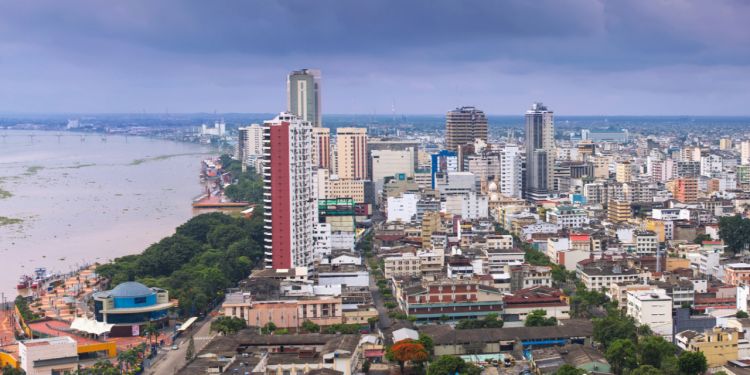
Work in Guayaquil
Here's a look at the potential professional avenues for an expatriate in the fast-evolving Ecuadorian city of Guayaquil known as the Pearl of the ...
Higher Education & Universities
Guayaquil hosts several reputable universities offering programs across engineering, business, medicine, and liberal arts. While most instruction occurs in Spanish, some programs offer bilingual or English-language courses, particularly at the graduate level. Ecuador's higher education system has expanded significantly, with 48% tertiary enrollment nationwide as of recent data.
Major Universities
Escuela Superior Politécnica del Litoral (ESPOL) is Ecuador's premier technical university, ranked third nationally and within the top 100 universities in Latin America. Founded in 1958, ESPOL specializes in engineering, technology, and natural sciences. Located on a 724-hectare campus on Vía Perimetral, the university features research centers, modern facilities, and protected forest areas. ESPOL offers 26 undergraduate degrees and 10 master's programs with selective admission (30-39% acceptance rate). Tuition for international students starts at approximately $2,500 annually, making it affordable compared to international standards.
Universidad Católica de Santiago de Guayaquil (UCSG), established in 1962, is a prestigious private Catholic institution offering comprehensive programs in law, medicine, architecture, business, and humanities. With a 26-hectare campus in the city center, UCSG provides modern amenities and has been accredited by international organizations. The university welcomes international students and offers exchange programs.
Admission and Recognition
International applicants must have their degrees validated by SENESCYT, Ecuador's higher education authority, which verifies foreign credentials. Admission typically requires entrance examinations, academic transcripts, and proof of Spanish proficiency unless enrolling in English-language programs. Many universities also participate in exchange agreements with institutions worldwide. Students can access quality education at a fraction of costs in North America or Europe, with living expenses in Guayaquil further enhancing affordability.
Sources: ESPOL Official Website, UCSG Official Website
Retirement in Guayaquil
Ecuador has become increasingly popular among retirees seeking affordable living, warm climate, and accessible healthcare. Guayaquil, while less favored than Cuenca or coastal towns, offers urban amenities, modern infrastructure, and proximity to beaches, making it suitable for retirees who prefer city life.
Retirement Visa Requirements
Ecuador's Pensioner Visa (Pensionado) is designed for retirees receiving guaranteed lifetime income. The monthly income requirement was reduced to just $425 in 2023, among the lowest globally for residency programs. Acceptable income sources include social security benefits, pensions, annuities, or other guaranteed lifetime payments. The application requires an official letter from the pension provider (apostilled), proof of monthly income meeting the threshold, police background check, valid passport, and health insurance. Dependents (spouse, children, grandchildren) can be included with an additional $200 monthly income requirement per dependent. The visa is valid for two years and renewable, providing a pathway to permanent residency.
Healthcare and Lifestyle
Ecuador offers both public (IESS) and private healthcare systems. Private health insurance is affordable ($50-$150 monthly for individuals), with quality care available at modern facilities in Guayaquil. The city's hospitals include Hospital Luis Vernaza, Hospital Clínica Kennedy, and Hospital de Especialidades Guayaquil.
Retirees can enjoy a comfortable lifestyle on modest budgets. A couple can live well on $1,500-$2,500 monthly, including rent in a safe neighborhood, dining out regularly, and entertainment. The tropical climate eliminates heating costs, while affordable domestic help, weekly house cleaning services, and low transportation costs enhance quality of life. Many retirees choose beach communities like Playas or Salinas (within 1-2 hours of Guayaquil) for permanent residence while maintaining access to the city's services and international airport.
Schooling for Children
Guayaquil offers diverse educational options for children, from public schools following the Ecuadorian curriculum to international schools providing American, British, or International Baccalaureate programs. While public education is free, international schools are the preferred choice for families seeking English-language instruction and internationally recognized diplomas.
International and Bilingual Schools
InterAmerican Academy (IAA) is the only school in Guayaquil with continuous international accreditation since 1982 (Cognia). Following an American curriculum, IAA grants US high school diplomas and is the sole Advanced Placement Capstone program in Ecuador. Operating on an August-to-June calendar, the school serves children from over 26 nationalities, including families from the US Consulate and multinational corporations. IAA offers comprehensive student support services, STEM programs, and Reggio Emilia approach in early years.
Colegio Alemán Humboldt de Guayaquil provides bicultural German-language instruction funded by Germany, following Baden-Württemberg curricula while meeting Ecuadorian and IB guidelines. The school teaches in German, Spanish, French, and English.
Several bilingual schools offer IB programs, including Colegio Americano de Guayaquil (American School), which has operated since 1942 and provides bilingual education with IB Diploma options.
Enrollment and Fees
International school fees vary significantly based on curriculum and facilities. While specific tuition rates should be confirmed directly with schools, annual fees typically range from $5,000 to $15,000, considerably lower than comparable institutions in North America or Europe. Most schools require entrance assessments, previous academic records, and immunization documentation. The Ecuadorian school year generally runs from April/May to February, though international schools like IAA follow Northern Hemisphere calendars.
Sources: InterAmerican Academy
Housing & Neighbourhoods
Guayaquil's housing market offers diverse options from modern high-rise apartments in upscale neighborhoods to affordable family homes in middle-class areas. The city has expanded significantly, with new developments offering gated communities, contemporary amenities, and improved security. Housing costs remain substantially lower than in major international cities, making homeownership or comfortable rentals accessible on moderate budgets.
Popular Neighborhoods for Residents
Samborondón, located across the bridge from central Guayaquil, represents the city's premier residential area. This upscale district features gated communities, luxury shopping at Plaza Lagos, international restaurants, and modern infrastructure. Popular with upper and upper-middle-class families, Samborondón offers security, parking, and a suburban feel. Average rent for a 1-bedroom apartment ranges from $500 to $800 monthly.
Urdesa is a trendy, tree-lined neighborhood in north-central Guayaquil known for its cosmopolitan atmosphere, diverse dining scene, and proximity to Mall San Marino. This established area attracts young professionals and families seeking a balance of urban amenities and residential tranquility. Rental prices for 1-bedroom apartments range from $400 to $700 monthly. Traffic can be challenging during rush hours due to the neighborhood's narrow valley location.
Los Ceibos is an upper-middle-class area offering modern amenities, shopping, and residential developments. Kennedy and Garzota provide middle-class housing options with good connectivity. The Via a la Costa corridor features newer gated communities with parks, pools, and integrated services.
Rental Process and Costs
Rental agreements typically require a security deposit (1-2 months' rent), proof of income, and references. Many landlords prefer long-term contracts (1 year minimum). Furnished apartments command higher rents but offer convenience for newcomers. For a 3-bedroom apartment in a good neighborhood, expect to pay $600 to $1,200 monthly. Utilities (electricity, water, internet) add approximately $50-$100 monthly. Real estate agents can facilitate the search process, though direct rentals through local networks are common.
Sources: Numbeo Guayaquil
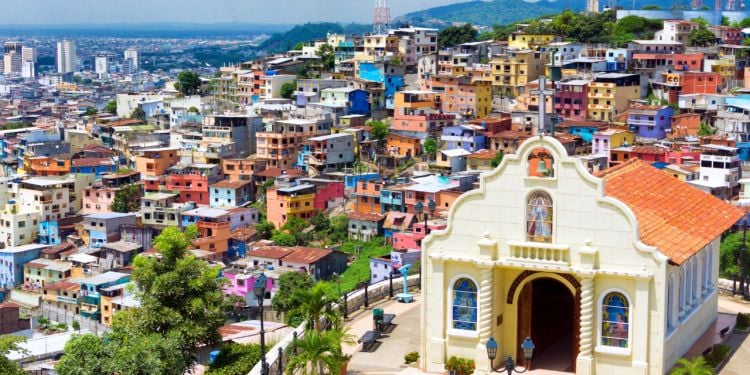
Accommodation in Guayaquil
It's safe to say Guayaquil is not about to threaten Cuenca's title as the sweetest spot to retire to – precisely because of safety issues. ...
Leisure, Culture & Things To Do
Guayaquil offers rich cultural experiences, recreational activities, and entertainment options that reflect its coastal heritage and modern development. The city's urban renewal projects have created attractive public spaces, while its proximity to beaches and natural reserves provides diverse leisure opportunities.
Cultural Attractions and Landmarks
The Malecón 2000, a 2.5-kilometer waterfront promenade along the Guayas River, serves as Guayaquil's cultural and recreational centerpiece. This beautifully landscaped boardwalk features gardens, fountains, monuments, museums, restaurants, and entertainment venues. Key highlights include La Perla, South America's largest Ferris wheel offering panoramic city views, the MAAC (Museum of Anthropology and Contemporary Art) showcasing pre-Colombian artifacts and contemporary exhibitions, and the historic Rotonda Monument commemorating the meeting of liberators Simón Bolívar and José de San Martín. The Torre Morisca (Moorish Clock Tower), a gift from London, adds architectural charm.
Las Peñas, Guayaquil's oldest and most colorful neighborhood, offers cobblestone streets lined with art galleries, cafés, and historic wooden houses. Visitors can climb the iconic 444 steps to Cerro Santa Ana, reaching a lighthouse with panoramic views of the city and river. The neighborhood, declared part of Ecuador's Architectural Heritage, comes alive in the evening with music and local activities.
Parque Seminario (Iguana Park) in the city center features dozens of iguanas roaming freely among visitors, creating a unique urban wildlife experience. The nearby neo-Gothic cathedral adds historical interest.
Outdoor Activities and Entertainment
Isla Santay, a 2,200-acre ecological reserve accessible via a pedestrian bridge from Las Peñas, offers cycling trails, birdwatching (85+ species), and opportunities to spot crocodiles and iguanas. The island's fishing communities maintain traditional lifestyles, and eco-lodges welcome visitors.
Parque Histórico Guayaquil, located across the Puente Rafael Mendoza Avilés bridge, combines colonial architecture, wildlife exhibits, and traditional farm experiences. Cerro Blanco Protected Forest, a 15,000-acre dry forest just outside the city, provides trails for hiking and birdwatching with over 200 species including toucans and parrots.
Guayaquil's nightlife centers on neighborhoods like Urdesa and Las Peñas, offering salsa clubs, modern dance venues, and casual bars. The culinary scene ranges from traditional Ecuadorian specialties at local markets to international cuisine at upscale restaurants in Samborondón's Plaza Lagos and along the Malecón.
Sources: Lonely Planet Guayaquil, My Travelation Guayaquil Guide
Daily Life
Daily life in Guayaquil revolves around a warm tropical climate, accessible transportation, and a relaxed coastal lifestyle. The city's infrastructure has improved significantly, with modern shopping centers, healthcare facilities, and entertainment options. However, Spanish language skills are essential for daily interactions, as English proficiency is limited outside international business contexts and tourist areas.
Transportation
Guayaquil operates Metrovía, a Bus Rapid Transit (BRT) system with multiple trunk lines connecting major city areas. Inaugurated in 2006, Metrovía offers air-conditioned buses on dedicated lanes, with fares around $0.30 per trip. The system includes feeder routes and integrated ticketing via the La Guayaca card. In 2025, Troncal 4 was added, expanding coverage to southwestern neighborhoods. The Aerovía, a cable car system, connects Guayaquil with the neighboring city of Durán, providing scenic river views.
Traditional buses cover extensive routes throughout the city, though schedules can be unpredictable. Taxis and ride-sharing services (Uber, Cabify) are widely available and affordable, with short trips costing $3-$8. Many residents use ride-sharing for safety and convenience. Car ownership is optional, as public transportation adequately covers most needs, though owning a vehicle provides flexibility for exploring coastal areas and weekend trips.
Lifestyle and Climate
Guayaquil experiences two seasons: a hot, rainy season (December-May) and a dry, slightly cooler season (June-November). Year-round temperatures range from 77-90°F (25-32°C), with high humidity. The tropical climate allows for outdoor activities throughout the year, including beach visits to nearby Playas, Salinas, or General Villamil. The city's dining scene offers diverse cuisines, from traditional Ecuadorian dishes like encebollado (fish stew) and ceviche to international restaurants in areas like Urdesa and Samborondón. Shopping centers such as Mall del Sol and Plaza Lagos provide modern retail experiences, cinemas, and entertainment.
Sources: Moovit Guayaquil Transit Guide, Lonely Planet Ecuador Transportation
Cost of Living
Guayaquil offers a significantly lower cost of living compared to major cities in North America, Europe, or Australia. The use of the US dollar simplifies financial planning, while stable inflation rates (projected at 2.2% for 2025) help maintain purchasing power. Housing represents the largest expense, but remains affordable by international standards, with additional savings in dining, transportation, and entertainment.
Monthly Budget for a Single Person
A single person can live comfortably in Guayaquil on a modest budget. Rent for a 1-bedroom apartment in a decent neighborhood averages $400-$600, while groceries, utilities, and transportation add reasonable monthly expenses. Dining out is affordable, with meals at local restaurants costing $3-$8. Entertainment options like cinema tickets cost approximately $5-$7.
Expense Category | Monthly Cost (USD) |
Rent (1-bedroom, city center) | $400-$600 |
Utilities (electricity, water, internet) | $50-$80 |
Groceries | $150-$250 |
Transportation (Metrovía/bus) | $30-$50 |
Dining out & entertainment | $100-$200 |
Health insurance (private) | $50-$100 |
Total | $780-$1,280 |
Sources: Numbeo Guayaquil
Monthly Budget for a Family of Four
Families with children should budget for larger housing (3-bedroom apartment at $700-$1,200), increased grocery expenses, and international school tuition if preferred. Private health insurance for a family typically costs $200-$400 monthly.
Expense Category | Monthly Cost (USD) |
Rent (3-bedroom, good area) | $700-$1,200 |
Utilities | $80-$120 |
Groceries | $400-$600 |
Transportation | $80-$150 |
International school (per child) | $400-$1,200 |
Health insurance (family) | $200-$400 |
Dining & entertainment | $200-$350 |
Total | $2,060-$4,020 |
Sources: Numbeo Guayaquil, Travel Pander Ecuador Cost Analysis
In Short
Guayaquil presents a compelling opportunity for those seeking an affordable, dynamic coastal city with growing economic prospects and modern infrastructure. As Ecuador's commercial heart, the city combines business opportunities, educational facilities, and cultural richness with a significantly lower cost of living than comparable international destinations. The simplified visa processes, use of the US dollar, and year-round tropical climate make relocation accessible and comfortable. While Spanish language skills are important for daily integration, the welcoming local community and expanding international presence create an environment where residents can thrive. Whether pursuing career advancement, raising a family in affordable comfort, or enjoying active retirement, Guayaquil offers the infrastructure and lifestyle to support your goals. Join fellow residents on the Expat.com forum for Guayaquil to connect with others, share experiences, and get practical advice for your move to this vibrant Ecuadorian city.
We do our best to provide accurate and up to date information. However, if you have noticed any inaccuracies in this content, please contact us.