Living in Iasi: the ultimate expat guide
Everything you need to know for a successful life in Iasi.
Iasi (pronounced "Yahsh") is the second-largest city in Romania and the undisputed cultural capital of the historic Moldavia region. Located in northeastern Romania near the border with the Republic of Moldova, this university city of approximately 320,000 residents combines centuries of history with a thriving modern economy. Once the capital of Moldavia and briefly the capital of Romania (1859-1862), Iasi has preserved its rich architectural heritage while emerging as one of Eastern Europe's fastest-growing tech hubs.
Why Iasi Appeals to Expats
The city offers a compelling mix of affordability, quality of life, and professional opportunities that attracts expatriates from across Europe and beyond. With five major universities and a young, educated population, Iasi maintains a vibrant cultural scene and welcoming atmosphere. The cost of living remains significantly lower than Western European cities while infrastructure and services continue to improve rapidly.
5 Good Reasons to Move to Iasi
- Affordable cost of living – Monthly expenses average USD 800-1,000, significantly lower than most EU capitals.
- Booming IT sector – Major tech companies including Amazon have development centers here, offering competitive salaries.
- Rich cultural heritage – Home to Romania's oldest university, finest national theatre, and stunning Palace of Culture.
- High-speed internet – Romania boasts some of the fastest and cheapest internet in Europe (up to 1 Gbps for USD 8/month).
- Safe and welcoming – Low crime rates and a student-friendly atmosphere make it ideal for families and professionals alike.
Working in Iasi: Opportunities in Romania's Tech Hub
Iasi has transformed into one of Romania's most dynamic job markets, particularly in the technology sector. The city ranks among the top three Romanian cities for IT employment, with major international companies establishing development centers here. For expats, this means access to competitive salaries and modern working environments, often with English as the primary business language.
Key Industries and Employment Sectors
The Information Technology sector dominates the job market, with companies like Amazon Development Center, Continental, and numerous software outsourcing firms actively recruiting. The average net salary for IT professionals in Romania reaches RON 11,000-12,000 (approximately EUR 2,200-2,400) monthly, with senior specialists earning significantly more. Beyond IT, opportunities exist in business process outsourcing (BPO), higher education, healthcare, and manufacturing.
Work Permits and Employment Rights
EU/EEA citizens enjoy full labor mobility and can work in Romania without permits. Non-EU nationals require a work permit obtained by their employer through the General Inspectorate for Immigration, followed by a long-stay visa (D/AM type). Romania has increased its annual quota for non-EU workers to 100,000 permits in 2025, reflecting strong labor demand. Processing typically takes 30-45 days.
The following table summarizes key employment indicators for Iasi:
Unemployment rate (Iasi County) | 2.8% (2024) |
Average net salary (national) | RON 5,508 / EUR 1,109 |
Average IT sector salary | RON 11,500 / EUR 2,300 |
Top sectors | IT, BPO, Education, Healthcare |
Sources: National Institute of Statistics (INS), Romania Insider
Working in Iasi
Iasi is the most important political, economic and cultural centre in Moldavia, one of the provinces of Romania. Iasi is located in the northeastern ...
Higher Education in Iasi: Study at Romania's Oldest University
Iasi holds a unique position in Romanian academia as the country's oldest and most prestigious university city. With approximately 60,000 students enrolled across five major institutions, the city maintains a youthful energy and intellectual atmosphere. For international students, Iasi offers quality education at remarkably affordable rates, with programs available in English and French.
Major Universities
The Alexandru Ioan Cuza University (UAIC), founded in 1860, is Romania's first modern university and consistently ranks among the country's top three institutions. It offers programs across 15 faculties including Law, Economics, Computer Science, and Philosophy, with numerous courses taught in English. UAIC is a member of prestigious networks including the Coimbra Group and European University Association. The Gheorghe Asachi Technical University specializes in engineering and applied sciences, while the Grigore T. Popa University of Medicine and Pharmacy attracts international medical students.
Tuition Fees and Admission
Tuition fees at Romanian universities remain highly competitive compared to Western Europe. For EU/EEA students, annual fees at UAIC range from RON 2,000-4,500 (EUR 400-900) depending on the faculty. Non-EU international students pay between EUR 1,980-2,520 annually. Medical programs are higher, typically EUR 5,000-6,000 per year. Applications should be submitted to the International Relations Office by June 15th for the October intake. Admitted students receive a Letter of Acceptance from the Ministry of Education to apply for their study visa.
Sources: Alexandru Ioan Cuza University, Gheorghe Asachi Technical University
Schools for Expat Children: International Education Options in Iasi
While Iasi's international school offerings are smaller than Bucharest's, families relocating here will find quality options for English-language education. The city's international schools follow British or American curricula, providing continuity for children from English-speaking backgrounds. Romanian public schools are free but teach exclusively in Romanian, making private international schools the preferred choice for most expat families.
International Schools in Iasi
The International British School of Iasi (IBSI) offers British-style education from preschool through Year 13 (ages 2-18). Following the National Curriculum for England, students can pursue IGCSEs and A-Levels. The school is located at Strada Sfântul Lazăr 27. The Cambridge School of Iasi provides the Cambridge International Curriculum from primary through secondary levels, with IGCSE and A-Level qualifications available. The American International School of Iasi offers an American-style education with a global perspective, currently serving preschool through Grade 8 with plans to expand.
Enrollment and Fees
International school tuition in Iasi ranges from approximately EUR 4,000-8,000 annually, considerably lower than international schools in Western Europe. Enrollment typically requires application forms, previous school records, references, and the child's birth certificate. Most schools accept applications throughout the year based on availability, though applying well before the academic year (September start) is advisable. Class sizes are generally small, averaging 15-20 students, ensuring personalized attention.
Sources: Cambridge School of Iasi
Housing in Iasi: Where to Live and What to Expect
Iasi's real estate market has grown considerably due to the tech sector boom, yet remains affordable compared to Bucharest and Cluj-Napoca. Expats can choose between apartments in modern developments near the business district or charming flats in historic neighborhoods. Most rentals come furnished, and landlords typically expect a one-month deposit plus the first month's rent upfront.
Best Neighborhoods for Expats
The City Center (Centru) offers the most convenient location, with walking access to restaurants, shops, and cultural attractions. It's ideal for those who want urban living without a car. Copou, in the northern part of the city, is one of the most picturesque areas with abundant green spaces including the famous Copou Park and Botanical Garden. It's close to several universities and offers a quieter atmosphere. The Palas area represents modern Iasi, with the major shopping mall, new office buildings, and contemporary apartment complexes – perfect for IT professionals. Tatarasi is popular with families for its large playground, green spaces, and proximity to the student campus.
Rental Prices
The following table shows average monthly rent in Iasi:
Studio apartment (center) | EUR 300-400 |
1-bedroom apartment (center) | EUR 350-500 |
3-bedroom apartment (center) | EUR 500-700 |
1-bedroom (outside center) | EUR 250-350 |
Sources: Numbeo, local real estate listings
Accommodation in Iasi
Iasi is the third economic centre of Romania, after Bucharest and Cluj. There are also comfortable and chic places for accommodation, ...
Leisure, Culture and Things to Do in Iasi
As Romania's cultural capital, Iasi offers a rich tapestry of museums, historic monuments, performing arts venues, and green spaces. The city's intellectual heritage, dating back centuries as a princely capital, remains visible in its architecture and cultural institutions. Whether you prefer classical concerts, outdoor activities, or lively student nightlife, Iasi delivers variety throughout the year.
Museums and Cultural Attractions
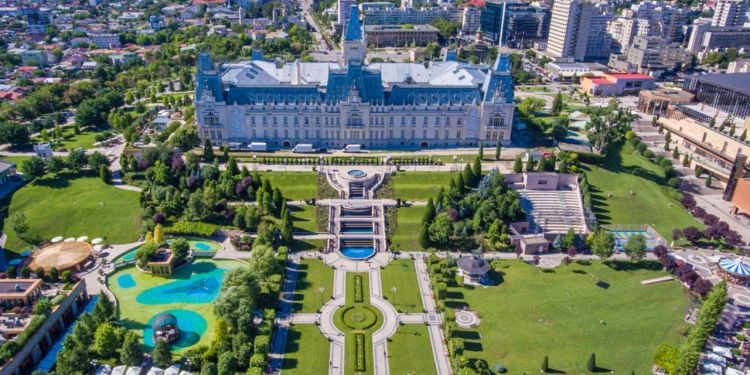
The magnificent Palace of Culture, built between 1906-1925 in neo-Gothic style, dominates the city center and houses four museums: the Moldavia History Museum, Ethnographic Museum, Art Museum (Romania's oldest, with works by Caravaggio and Van Dyck), and the Science and Technology Museum. Entry to all four costs approximately RON 40 (EUR 8). The Vasile Alecsandri National Theatre, Romania's oldest (1896), features a stunning Baroque-Rococo interior and regular performances. Don't miss the Trei Ierarhi Monastery, a 17th-century architectural masterpiece with intricate exterior carvings, and the imposing Metropolitan Cathedral, Romania's largest Orthodox church.
Parks, Nightlife and Entertainment
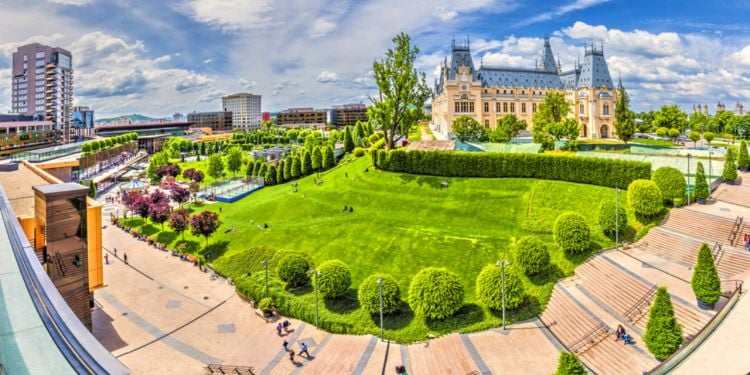
Copou Park offers a peaceful retreat with its famous linden tree associated with poet Mihai Eminescu, while the Botanical Garden is the largest in Romania. The Palas Mall complex includes shopping, cinemas, and a pleasant park area. For nightlife, the city center around Strada Lăpușneanu buzzes with cafes, bars, and clubs catering to the large student population. The annual Iasi City Days festival (October) and the Luceafărul Theatre Festival bring cultural events throughout the year. Day trips to the stunning Bucovina painted monasteries (UNESCO World Heritage) are easily arranged.
Sources: Romania Tourism, Palace of Culture
Daily Life in Iasi: Getting Around and Settling In
Daily life in Iasi combines Eastern European charm with modern conveniences. The city is compact enough to navigate easily, and most amenities are readily available. Romania's entry into the Schengen Area in 2024 has simplified travel connections, while the local infrastructure continues to improve with EU-funded modernization projects.
Public Transportation
Iasi operates an extensive public transport network managed by CTP Iasi, consisting of 9 tram lines and 24 bus routes. The city is investing heavily in modernization, with new electric trams and buses being added through EU recovery funds. A single ride costs RON 3.50 (approximately EUR 0.70) for 120 minutes. Monthly passes are available for RON 110 (EUR 22) for unlimited urban travel. Tickets can be purchased at stations, on board via contactless payment, or through the 24Pay app. Taxis are affordable, with rates around EUR 0.40-0.50 per kilometer. The Iasi International Airport offers connections to major European cities, with bus line 50 linking it to the city center.
Everyday Practicalities
Romania uses the Romanian Leu (RON), though EUR is sometimes accepted in tourist areas. Banks and ATMs are plentiful. Major supermarket chains include Kaufland, Lidl, Carrefour, and Mega Image. Internet connectivity is exceptional – Romania consistently ranks among the world's fastest, with 1 Gbps fiber connections available for around EUR 8-10/month. English is widely spoken among younger Romanians, particularly in business and university settings. The city is very safe, with low crime rates compared to other European cities of similar size.
Cost of Living in Iasi: Your Monthly Budget Guide
One of Iasi's greatest advantages for expats is its affordability. Living costs are approximately 50-60% lower than major Western European cities while maintaining a good quality of life. The following tables provide realistic monthly budgets based on current prices.
Monthly Budget for a Single Person
This estimate assumes renting a 1-bedroom apartment in a central area and a moderate lifestyle:
Rent (1-bedroom, center) | EUR 400 |
Utilities (electricity, heating, water, internet) | EUR 100-150 |
Groceries | EUR 200-250 |
Public transport (monthly pass) | EUR 22 |
Dining out / Entertainment | EUR 150-200 |
Health insurance (private) | EUR 50-80 |
TOTAL | EUR 920-1,100 |
Monthly Budget for a Family of Four
This estimate includes a 3-bedroom apartment and one child in international school:
Rent (3-bedroom, good area) | EUR 600 |
Utilities | EUR 180-220 |
Groceries | EUR 400-500 |
International school (monthly) | EUR 400-650 |
Transport / Car expenses | EUR 150 |
Leisure / Dining out | EUR 250-300 |
Health insurance (family) | EUR 150-200 |
TOTAL | EUR 2,130-2,620 |
Sources: Numbeo 2025, LivingCost.org
In Short
Iasi represents an excellent choice for expats seeking an affordable European destination with genuine character. As Romania's cultural and academic heart, it offers intellectual stimulation, career opportunities (particularly in tech), and a welcoming community – all at a fraction of Western European costs. The city's historic architecture, vibrant student atmosphere, and improving infrastructure create a unique living environment where tradition meets modernity. While it may lack the international profile of Bucharest or Cluj, this works in favor of those seeking a more authentic Romanian experience. Whether you're drawn by a job opportunity, studies, or simply seeking a new adventure in an undiscovered corner of Europe, Iasi rewards those who give it a chance. Connect with fellow expats and get local tips on the Expat.com Iasi forum to start planning your move.
We do our best to provide accurate and up to date information. However, if you have noticed any inaccuracies in this content, please contact us.